5 Leadership Weaknesses: Your Guide to Fixing Them Fast
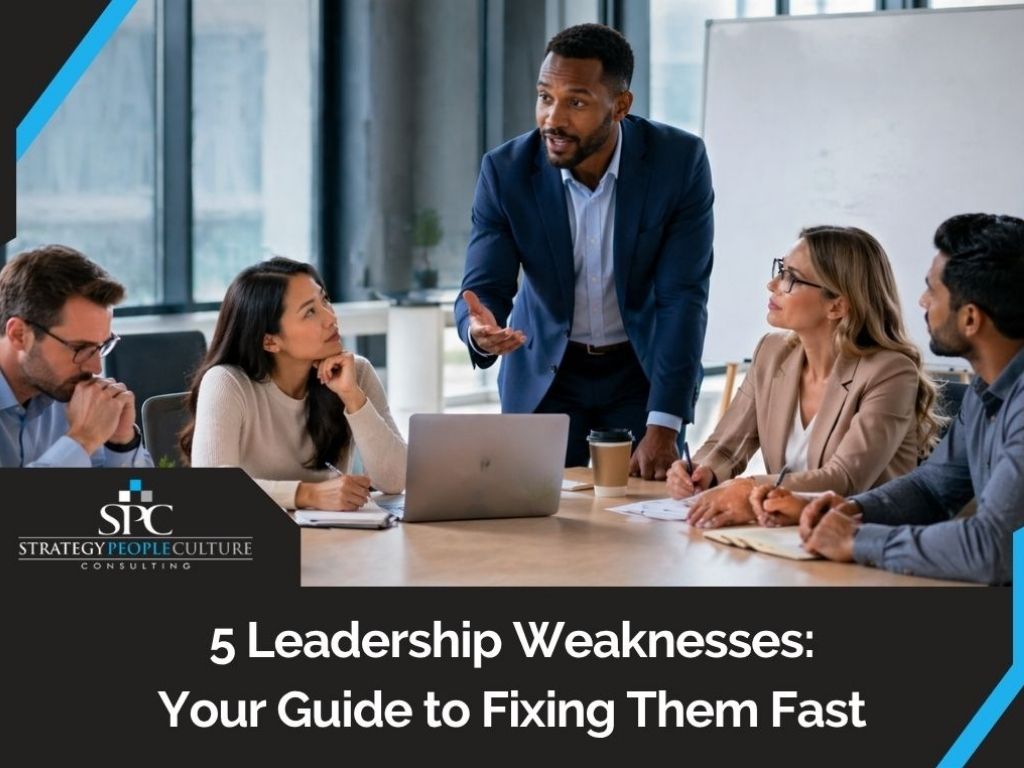
Small gaps in communication, trust, self-awareness, or decision-making can quietly slow your team, damage morale, and limit results. You need to spot them early and fix them fast because strong leadership is not about being flawless. It’s about knowing where you’re struggling and taking action before those weaknesses grow.
How can you turn those weak spots into real leadership growth? That’s where Strategy People Culture can help. By giving leaders practical ways to assess blind spots, strengthen core skills, and build healthier team dynamics, the brand helps turn leadership weaknesses into opportunities for progress, trust, and better performance.
Common Leadership Weaknesses:
- Poor Communication: Failing to articulate a clear vision or connect daily work to strategic goals.
- Micromanagement: Not trusting team members, which creates resentment, stifles creativity and leads to burnout.
- Low Emotional Intelligence: Lacking empathy or making decisions based on a need to be either right or liked.
- Resistance to Change: Avoiding innovation and suffering from “hurry sickness”—a constant state of busyness.
- Lack of Self-Awareness: Not recognizing personal blind spots or accepting honest feedback.
When leaders are unaware of their shortcomings, the consequences ripple throughout the organization. In fact, 85% of employees report experiencing conflict in the workplace, often due to poor leadership. High turnover and disengaged teams are not random; they are symptoms of unaddressed leadership gaps. According to Gallup’s research on employee engagement, managers account for at least 70% of the variance in employee engagement scores.
The good news is that these weaknesses are opportunities for growth. Research on executive coaching outcomes highlights that focused development efforts can improve performance, emotional intelligence, and decision-making.
I’m Andrew Botwin, founder of Strategy People Culture, LLC. We use our experience in executive coaching and organizational development to help leaders transform their blind spots into strengths or curated paths, to enhance awareness and not allow the blind spots to become impactful weaknesses.
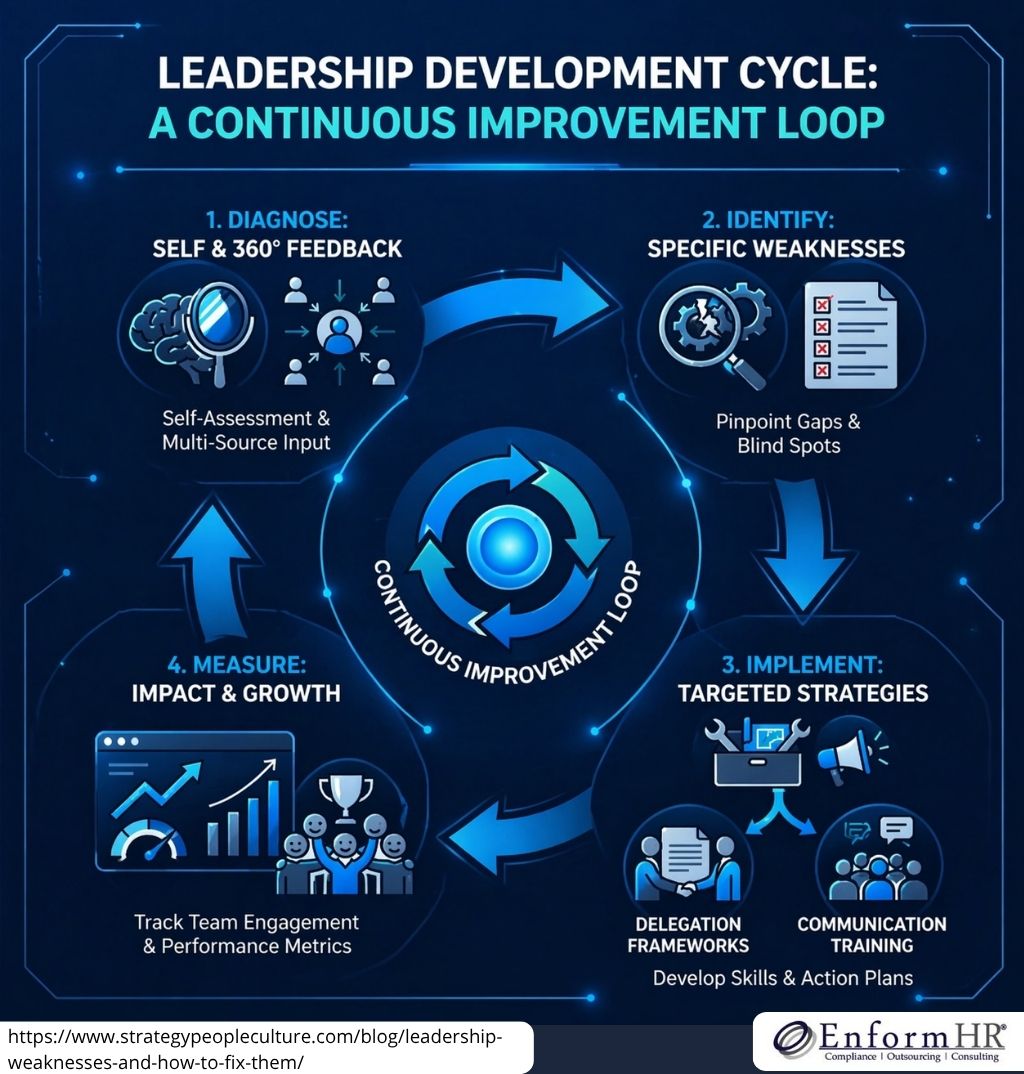
Diagnosing and Fixing Common Leadership Weaknesses
How to Develop Self-Awareness to Recognize Your Weaknesses
No leader is perfect. The first and most crucial step in addressing leadership weaknesses and how to fix them is cultivating deep self-awareness. This process begins with honest self-reflection but must be validated with external feedback to be truly effective.

While self-assessment methods like journaling or a personal SWOT analysis are useful starting points, our own perspective is inherently biased. To gain a complete picture, leaders should seek external insights through:
- 360-Degree Feedback: This process gathers anonymous input from peers, direct reports, and supervisors, providing a holistic view of a leader’s impact. It is a powerful tool for uncovering blind spots, which is why More than eighty-five percent of all Fortune 500 companies utilise the 360-degree feedback process.
- Mentorship and Coaching: An experienced mentor or an executive coach provides objective counsel and a fresh perspective, helping leaders improve their Situational Awareness in the Workplace and develop mitigation strategies.
For this feedback to be honest and useful, leaders must foster an environment of Psychological Safety at Work, where team members feel safe to speak up without fear of negative consequences. Recognizing weaknesses isn’t about achieving perfection; it’s about continuous improvement. If as a leader, you are improving it stands to reason so will the success of the organization grow.
Common Leadership Weaknesses and How to Fix Them: Communication & Vision
When a leader’s communication is poor or their vision is unclear, teams become confused, disengaged, and unproductive. These are among the most critical leadership weaknesses and how to fix them.

The Weaknesses: Leaders often fail to set clear expectations, leaving employees guessing about their roles and priorities. This is compounded by a lack of a compelling vision, which robs the team of purpose and direction. Ineffective or absent feedback further erodes morale, as employees are left uncertain about their performance.
The Fix: Effective Communication is the cornerstone of leadership. To fix these issues, leaders must:
- Articulate a Clear Vision: Consistently communicate where the organization is going and how each team member’s work contributes to that goal.
- Set Explicit Expectations: Remove ambiguity by clearly defining roles, responsibilities, and desired outcomes for every project.
- Practice Active Listening: Communication is a two-way street. Prioritize hearing your team’s ideas and concerns to build trust and gather valuable insights. Improving your ability for Listening: Improve Leadership Skills is a direct investment in your effectiveness. Remember, there is a clear difference between hearing and listening.
- Provide Constructive Feedback: Make feedback a regular, two-way conversation that is specific, timely, and focused on behavior and outcomes, not personality.
Common Leadership Weaknesses and How to Fix Them: Trust & Delegation
Micromanagement and an inability to delegate are significant leadership weaknesses and how to fix them. These behaviors stem from a lack of trust and can cripple a team’s morale, creativity, and productivity.
The Weaknesses: Micromanaging leaders stifle autonomy by controlling every detail, signaling to employees that they are not trusted. This leads to disengagement and a reluctance to take initiative. Similarly, leaders who refuse to delegate become bottlenecks, burning themselves out on operational tasks while failing to focus on strategic priorities. Both actions erode the Trust in Leadership that is essential for a healthy work environment.
The Fix: Overcoming these tendencies requires a deliberate shift toward empowering your team.
- Focus on Outcomes, Not Your Way: Clearly define the desired result and give your team the autonomy to determine the best way to achieve it. This fosters ownership and innovation.
- Practice Strategic Delegation: Effective Delegation in Leadership involves more than offloading tasks. It’s about strategically assigning responsibilities to develop your team’s skills and free your time for high-level work.
- Provide Support, Not Control: Offer clear instructions and resources, then trust your team to execute. Check in to offer guidance and remove roadblocks, not to nitpick their work.
- Let Go of Perfectionism: Accept that a delegated task may be done differently than how you would do it. The goal is competence and growth, not cloning your methods.
Addressing Deficiencies in Emotional Intelligence and Authenticity
How leaders connect with their teams on a human level is defined by their emotional intelligence and authenticity. A deficit in these areas is a profound weakness that can prevent a leader from earning genuine respect.
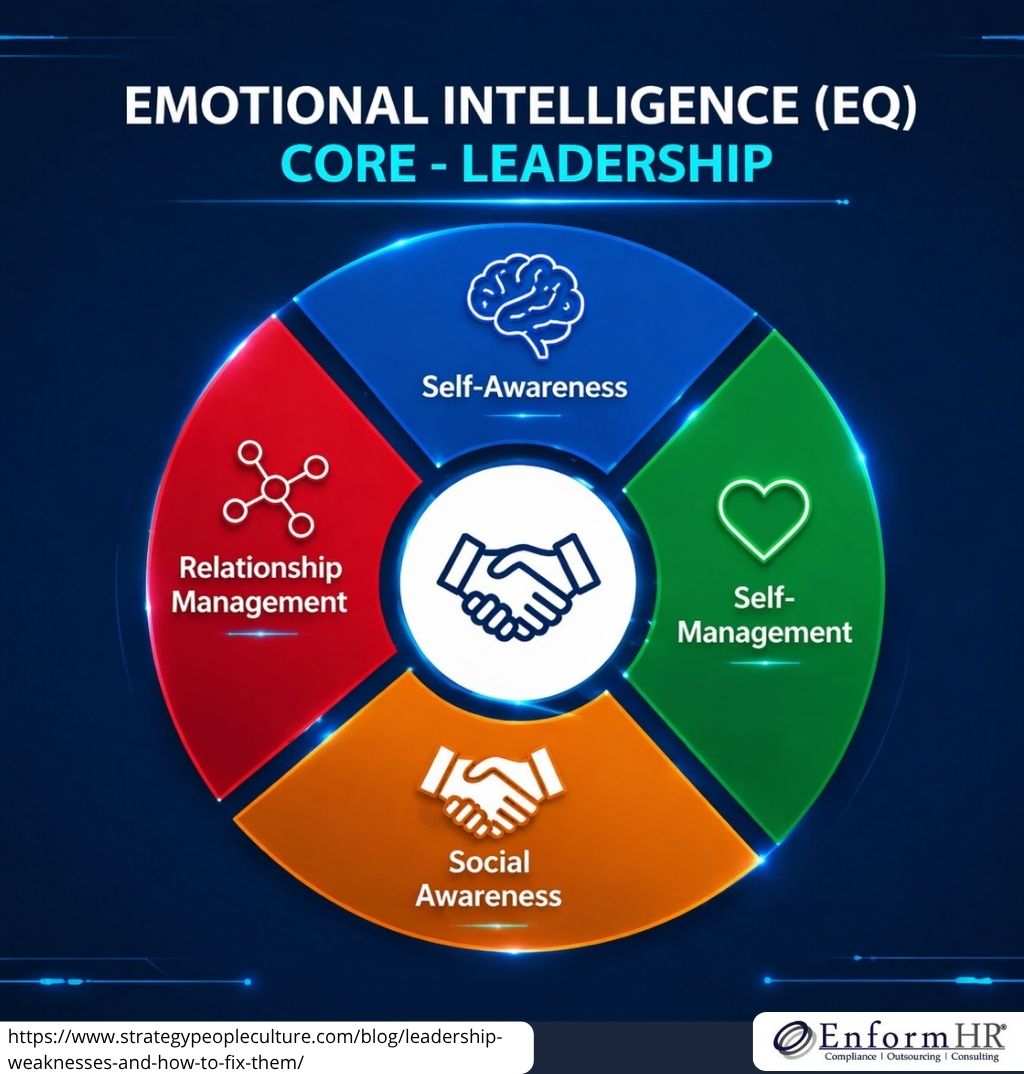
The Weaknesses: A leader with low Emotional intelligence is often cited as one of the most critical qualities of a leader. They may struggle to manage their own emotions or empathize with others, appearing cold or uncaring. Another common pitfall is prioritizing being liked over making sound business decisions, which leads to inconsistency and erodes respect. Finally, hypocrisy—a “do as I say, not as I do” attitude—is toxic and destroys credibility.
The Fix: Cultivating these traits requires introspection and a commitment to genuine leadership.
- Develop Emotional Intelligence: Actively seek feedback on your interpersonal impact and practice empathy by trying to understand your team’s perspectives.
- Seek Respect Over Likability: Make the right decisions for the business, even if they are unpopular, and communicate the reasoning behind them. True Power vs. Influence comes from earned respect, not from trying to please everyone.
- Align Actions with Words: Be a model of integrity. Hold yourself to the same standards you expect from your team. Authenticity is built on consistency between your words and your actions.
Overcoming Stagnancy and ‘Hurry Sickness’
In a rapidly changing world, stagnancy and “hurry sickness” are two modern leadership weaknesses and how to fix them. They can stifle innovation, cause burnout, and prevent leaders from engaging in deep, strategic work.
The Weaknesses: Stagnancy arises when leaders resist new ideas and fail to adapt, causing the organization to lose its competitive edge. This is often driven by a fear of failure. On the other end of the spectrum is “hurry sickness,” a relentless drive to do more, faster. Leaders suffering from “hurry sickness” in leadership are often overcommitted, stressed, and ironically, less effective at strategic planning.
The Fix: Combating these issues requires fostering a culture of learning and intentional focus.
- Accept a Growth Mindset: Encourage your team to challenge the status quo and experiment with new ideas. Effective Change management fundamentals for leaders start with the leader’s own willingness to adapt.
- Reframe Failure as Learning: Create a culture where mistakes are seen as opportunities for growth. This builds resilience and is essential for Leading Through Uncertainty.
- Set Boundaries and Prioritize Deep Work: Model healthy work habits by empowering your team to work decisively and being thoughtful on your approach to after hours expectations and the way your communication may be either intentionally or inadvertently sending a message. Schedule uninterrupted time for strategic thinking, demonstrating that thoughtful engagement is more valuable than constant busyness.
A Roadmap for Continuous Leadership Growth
The journey of leadership is a marathon of continuous growth and adaptation. We’ve explored common leadership weaknesses and how to fix them, from communication gaps and micromanagement to low emotional intelligence and stagnancy. These are not permanent flaws but opportunities to evolve and lead with greater impact.
Turning weaknesses into strengths is the hallmark of a great leader. It requires:
- Self-Awareness: Pinpointing blind spots through self-assessment and feedback.
- Clear Communication: Aligning teams with a clear vision and active listening.
- Empowerment: Building trust through effective delegation.
- Authenticity: Earning respect with emotional intelligence and integrity.
- Agility: Embracing change and overcoming the trap of “hurry sickness.”
No leader is without areas for improvement. The difference between stagnation and progress lies in the willingness to identify and work on these challenges. This commitment to self-improvement is transformative for you, your team, and your organization.
For leaders throughout the globe, investing in professional development is a powerful strategy. At Strategy People Culture, LLC, we specialize in guiding leaders on this journey.
Our Executive Coaching: Critical CEO Journey programs offer the objective insight and custom strategies needed to steer complex challenges.
Partnering with experts through Executive leadership coaching services can provide the roadmap for profound and lasting change.
Fixing leadership weaknesses is an ongoing advantage, not a one-time task. If you are ready to identify what is holding you back and turn it into stronger leadership, we can help you move faster with clarity and confidence.