
Become a Servant Leader: Elevate Your Workplace Impact

Why Does Being a Servant Leader at Work Feel So Important Right Now, and So Hard to Put Into Practice?
If you’re trying to support your team, hit goals, and avoid becoming the kind of boss people shut down around, the tension is real. You need a better way to lead – one that builds trust, strengthens performance, and helps people do their best work without relying on control alone.
That is where Strategy People Culture can help. Become a servant leader at work by learning how to put people first while still driving accountability and results. This approach is not soft or vague – it is a practical shift that helps you remove obstacles, grow your team, and create the kind of workplace people want to stay in and contribute to.
Here’s what being a servant leader at work looks like in practice:
- Serve first, direct second – Ask “How can I help?” instead of “What can you do for me?”
- Listen actively – Understand what your team needs to succeed
- Empower growth – Focus on developing people, not just completing tasks
- Build community – Foster genuine connections and psychological safety
- Lead with humility – Admit mistakes and share credit freely
- Remove obstacles – Clear the path so your team can do their best work
The concept isn’t new. Robert K. Greenleaf coined the term “servant leadership” in 1970, but the idea has ancient roots. What is new is the mounting evidence that this approach delivers real business results—from Southwest Airlines’ 47 consecutive years of profitability to measurable increases in employee engagement and retention across industries.
Many leaders find themselves trapped in outdated command-and-control models that drain morale and drive talent away. Your employees today (or really ever) don’t want a boss who hoards information or micromanages. They want a leader who removes roadblocks, invests in their development, and trusts them to excel.
I’m Andrew Botwin, founder of Strategy People Culture, and I’ve spent my career helping business leaders transform their organizations by adopting people-oriented approaches like being a servant leader at work. After scaling multiple businesses and coaching executives through cultural changes, I’ve seen how servant leadership creates workplaces that attract top talent and drive sustainable growth. Just as importantly, I have seen how ego driven command-and-control management has limited the potential in organizational profits.
What is Servant Leadership and Why Does It Matter?
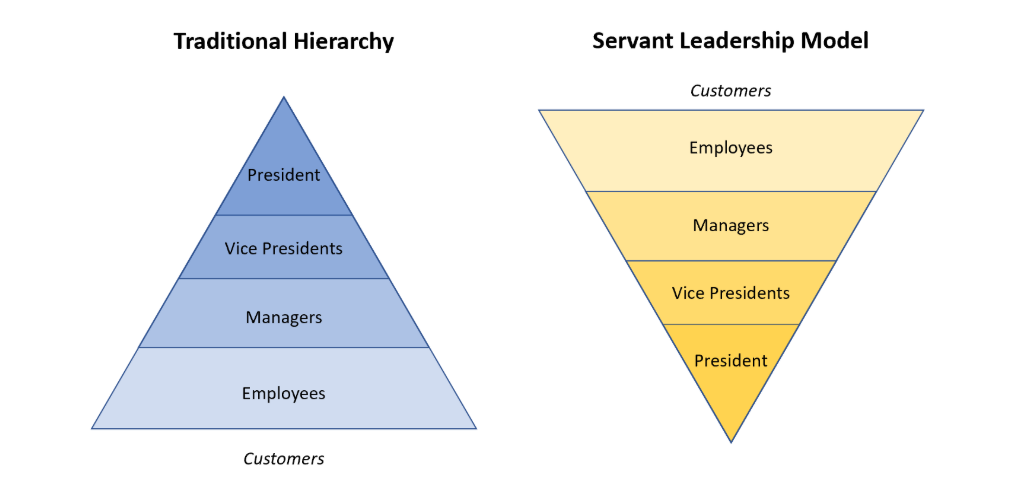
At its heart, servant leadership is a philosophy that redefines the leader’s role. Instead of viewing leadership as a position of power or authority, we see it as an opportunity to serve. This “servant-first” mindset means our primary goal as leaders is to foster the well-being and development of those we lead, to help them be their best instead of telling them how to be. It’s about inverting the traditional organizational pyramid, placing the leader at the bottom, supporting the team above.
This approach isn’t just about being “nice”; it’s a strategic framework that yields tangible benefits. When we prioritize our team’s needs, we cultivate an environment where people feel valued, respected, and empowered. This leads to increased employee engagement, higher job satisfaction, and a significant reduction in turnover. We’ve seen how a leader’s emotional intelligence, a key component of servant leadership, can transform team dynamics and productivity. Learn more about how Emotional Intelligence in Leadership can improve your leadership style.
Let’s look at how servant leadership stacks up against more traditional styles:
| Feature | Servant Leadership | Traditional (Authoritarian) Leadership |
|---|---|---|
| Primary Focus | Growth and well-being of followers | Achieving organizational goals through directive control |
| Power Dynamic | Shared power, influence through persuasion | Centralized power, authority through position |
| Decision-Making | Collaborative, inclusive, seeks team input | Top-down, leader-centric |
| Motivation | Intrinsic, empowerment, personal development | Extrinsic, rewards/punishments, compliance |
| Communication | Two-way, active listening, open dialogue | One-way, directives, limited feedback channels |
| Leader’s Role | Steward, coach, mentor, obstacle-remover | Director, supervisor, decision-maker |
| Team Outcome | High engagement, trust, innovation, loyalty | Compliance, potential for disengagement, limited creativity |
The Origins and Core Philosophy
The concept of servant leadership was formally introduced by Robert K. Greenleaf in his 1970 essay, “The Servant as Leader.” Greenleaf, who had a distinguished 38-year career at AT&T, observed that the best leaders were often those who started with a natural feeling that they wanted to serve first. This fundamental desire is what distinguishes a servant leader.
Greenleaf’s philosophy suggests that the leader’s main task is to ensure that other people’s highest priority needs are being served. The ultimate test, he proposed, is whether those served grow as persons, becoming healthier, wiser, freer, more autonomous, and more likely themselves to become servants.
The Proven Benefits for Your Team and Business
The impact of being a servant leader at work extends far beyond individual well-being; it significantly boosts organizational performance. Research consistently shows that teams led by servant leaders exhibit higher levels of cooperation and are more effective in achieving their goals than those led by non-servant leaders. This isn’t surprising when we consider the environment a servant leader cultivates.
Servant leadership has been directly linked to increased employee engagement and job satisfaction. When employees feel supported and heard, they are more likely to invest themselves fully in their work. Organizations that adopt servant leadership principles often report higher levels of trust and psychological safety among employees. This psychological safety encourages open communication, risk-taking, and innovation, as employees feel safe to voice ideas and concerns without fear of reprisal.
Furthermore, servant leadership can lead to a reduction in employee turnover, as people are more likely to stay with organizations where they feel valued and have opportunities for growth. A study also found that servant leadership positively impacts organizational citizenship behaviors, meaning employees are more likely to go above and beyond their job duties, contributing to the overall success of the team and company.
For more on motivating your team, check out our insights on How to Motivate Employees as a Leader. This people-first approach translates into improved business performance and higher profits, as engaged and empowered teams drive better results.
The Core Principles of Being a Servant Leader at Work

Being a servant leader at work isn’t about a single action; it’s about embodying a set of core principles that guide our interactions and decisions.
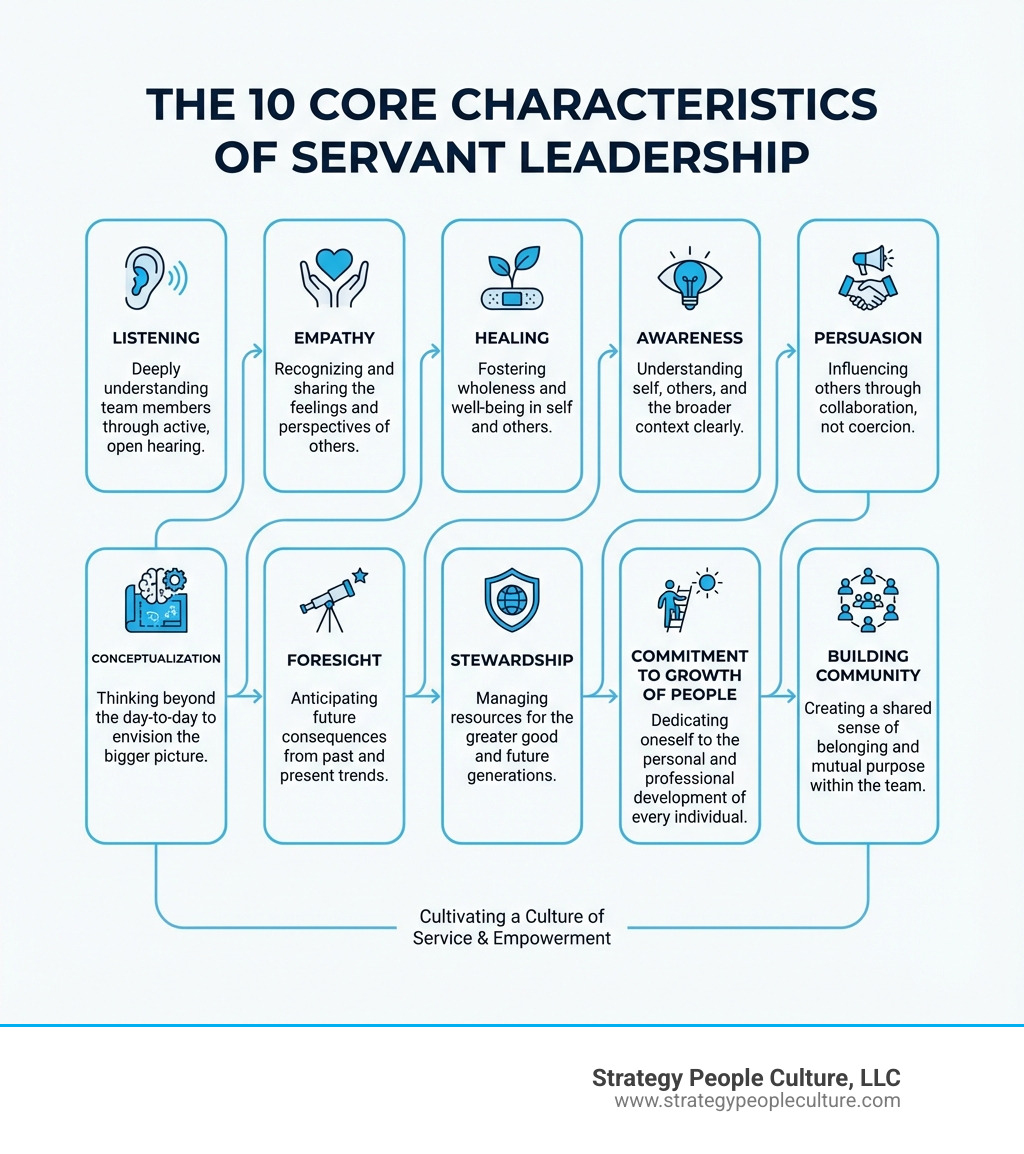
Larry Spears, a key proponent of servant leadership and former CEO of the Robert K. Greenleaf Center, distilled Greenleaf’s original ideas into ten foundational characteristics. We can group these into actionable themes to make them easier to integrate into our daily leadership. These principles also naturally tie into the broader idea of Leadership Accountability in Business.
Cultivating Essential Traits: Empathy, Listening, and Humility
Three cornerstones of servant leadership are empathy, active listening, and genuine humility.
- Listening: This goes beyond simply hearing words; it’s about active listening to truly understand our team members. A servant leader dedicates their full attention, processes what is said, and pays attention to unspoken needs and concerns. Research has revealed that this emphasis on two-way communication results in increased trust and team cohesion. When we listen with the intent to understand, not just to reply, we open the door to deeper connection and problem-solving.
- Empathy: Empathy is the ability to understand and share the feelings of another. It’s not sympathy, which is feeling for someone; it’s feeling with them. An empathetic leader strives to see the world from their team’s perspective, acknowledging their struggles, aspirations, and viewpoints. This builds trust and shows our team that we are equals, willing to steer challenges together.
- Humility & Awareness: A truly humble leader acknowledges they don’t have all the answers. They are self-aware, understanding their own strengths, weaknesses, and biases. This allows them to seek input from others, admit mistakes, and give credit where it’s due. Humility fosters an environment where team members feel safe to contribute their ideas and expertise, knowing their leader values their insights. This also connects to self-awareness and the ability to heal relationships within the team by addressing conflicts with compassion. Cultivating humility can also help us to Build Confidence in Leadership by focusing on collective strength rather than individual infallibility.
Applying Principles into Practice: Stewardship and Community Building
Beyond personal traits, servant leadership involves practical actions that empower teams and build strong organizational culture.
- Stewardship: Peter Block described stewardship as “accountability without control or compliance.” As servant leaders, we see ourselves as stewards of our organization and its people. Our role is to guide, protect, and nurture, ensuring resources are used wisely and the team is set up for success. This means providing direction and support, while empowering our team to take ownership and make decisions. It’s about holding the light in a dark tunnel, as Block puts it, to help others see the way.
- Commitment to the Growth of Others: A fundamental tenet of servant leadership is an unwavering commitment to the personal and professional growth of each individual on our team. This means investing in their development, providing opportunities for learning, and mentoring them to reach their full potential. It’s about seeing beyond their current role and helping them prepare for future success.
- Building Community: Servant leaders actively work to foster a strong sense of community within their teams and organization. This involves creating an inclusive environment where individuals feel connected, supported, and part of something larger than themselves. By encouraging collaboration and shared goals, we build relationships that are not solely dependent on us as the leader. This naturally leads to Collaborative Leadership and a more cohesive, productive team.
- Persuasion: Instead of relying on positional authority, servant leaders use persuasion to influence and guide their teams. This means building consensus through clear communication, logical arguments, and inspiring vision, rather than issuing commands. It respects the autonomy of team members and encourages genuine buy-in.
- Conceptualization & Foresight: Servant leaders possess the ability to think beyond day-to-day realities, envisioning the bigger picture and future possibilities (conceptualization). This is coupled with foresight – the ability to anticipate future outcomes by learning from past events and understanding present realities. This strategic thinking allows us to guide our teams effectively toward long-term goals.
How to Apply Servant Leadership Skills in Your Daily Role

Transitioning to being a servant leader at work is a journey, not a destination. It requires continuous self-reflection, a willingness to seek feedback, and a commitment to continual learning. It’s about consistently prioritizing our team’s needs and growth, even when pressures mount.
We don’t have to be perfect, but we do need to be intentional. Engaging in Leadership Coaching: Unlock Potential can be incredibly helpful in this process, providing a structured path for development and self-awareness.
Practical Steps for Being a Servant Leader at Work
Here are some practical actions we can integrate into our daily and weekly routines to embody servant leadership:
- Ask “How can I help?” consistently: Make this your go-to phrase. Whether in one-on-one meetings, team discussions, or when a challenge arises, genuinely offer your support and then follow through.
- Remove obstacles: Actively identify and eliminate roadblocks that prevent your team from doing their best work. This could be anything from bureaucratic problems to lack of resources or conflicting priorities.
- Schedule development check-ins: Beyond performance reviews, dedicate time for informal conversations focused solely on your team members’ growth aspirations, career goals, and skill development.
- Celebrate team members’ successes: Recognize and applaud individual and team achievements publicly and privately. Make sure credit is given where it’s due, amplifying their contributions.
- Practice transparent communication: Share information openly and honestly, explaining the “why” behind decisions. This builds trust and ensures everyone feels informed and connected to the larger mission. Effective Communication in Leadership is non-negotiable for servant leaders.
- Listen actively and empathetically: During conversations, give your full attention. Ask open-ended questions, listen without interrupting, and seek to understand their perspective before offering solutions.
- Empower decision-making: Delegate meaningful responsibilities and provide the autonomy necessary for your team to make decisions. Trust their judgment and support them, even if they make mistakes.
- Model humility and vulnerability: Be open about your own learning journey, admit when you don’t know something, and ask for help. This creates a safe space for others to do the same.
Navigating the Challenges and Criticisms
While highly effective, being a servant leader at work isn’t without its challenges. It requires a significant mindset shift and can sometimes be met with resistance or misunderstanding.
- Time-consuming nature: Investing in individual growth, active listening, and obstacle removal takes time. This can feel challenging in environments where immediate results are prioritized. We must remember that this investment pays dividends in the long run through increased engagement and productivity.
- Perceived lack of authority: Some team members or traditionalists might misinterpret a servant leader’s humility and focus on service as a lack of authority or decisiveness. It’s crucial to balance service with a clear vision and strategic direction.
- Potential for leader burnout: Constantly prioritizing others’ needs can be draining. Servant leaders must also practice self-care and set boundaries to avoid burnout. We can’t pour from an empty cup.
- Resistance from traditionalists: Individuals accustomed to command-and-control leadership might resist this approach, viewing it as “soft” or ineffective. Educating and demonstrating the tangible benefits of servant leadership is key.
- Balancing service with achieving targets: While servant leadership prioritizes people, it doesn’t neglect results. The challenge lies in integrating both seamlessly, demonstrating that investing in people is the most effective way to achieve and exceed organizational goals.
- Misinterpretation of the term “servant”: The word “servant” can carry negative connotations for some, implying subservience rather than empowerment. It’s important to clarify that being a servant leader at work means serving the growth and success of others, not being a doormat. Addressing these Leadership Weaknesses openly and proactively is vital.
Servant Leadership in Action: Real-World Success Stories
The true power of being a servant leader at work is best illustrated through organizations and individuals who have successfully embodied its principles. These real-world examples demonstrate that a people-first approach can lead to extraordinary tangible results, fostering loyalty, innovation, and long-term profitability, all while actively avoiding Toxic Leadership Traits.
Case Study: Southwest Airlines
Perhaps one of the most celebrated examples of servant leadership in action is Southwest Airlines. Under the visionary leadership of its founder, Herb Kelleher, Southwest Airlines built its entire philosophy around putting employees first. Kelleher famously stated that “employees come first… if they’re happy, they’ll make the customers happy.”
This employee-first culture wasn’t just a slogan; it was deeply embedded in every aspect of the company. Employees were empowered to make decisions, trusted to do what was right, and treated with respect. This philosophy directly contributed to Southwest’s remarkable success, including 47 consecutive years of profitability, an unheard-of feat in the volatile airline industry. The 2014 Southwest Airlines Keynote further highlighted how this unique approach to leadership fostered a powerful sense of community and dedication among its workforce, proving that when you serve your employees, they, in turn, serve your customers and your business with unparalleled dedication.
The Organizational Impact of Being a Servant Leader at Work
The success of Southwest Airlines is not an isolated incident. Many other organizations have thrived by embracing servant leadership principles:
Starbucks Corporation: The company refers to its employees as “partners” and backs this up with practices that reflect a servant-leadership mindset, such as early stock ownership opportunities and comprehensive health insurance for both full-time and part-time staff (a rarity in retail when introduced). By investing in people’s well-being and treating them as key stakeholders, Starbucks has fostered a loyal, engaged workforce that strengthens customer service and long-term brand loyalty.
The Ritz-Carlton: In the luxury hospitality sector, Horst Schulze, former President and COO of The Ritz-Carlton, championed a culture of excellence by prioritizing his team. He focused on supporting employees and removing obstacles that prevented them from delivering exceptional service. This approach cultivated a highly motivated workforce dedicated to upholding the brand’s legendary standards.
In both these examples, the focus on employee growth, engagement, and well-being directly led to improved innovation, better problem-solving, and a positive, resilient organizational culture. These leaders understood that an Intentional Culture and Leadership built on service creates a powerful competitive advantage. When employees feel valued and empowered, they become the driving force behind organizational success.
Servant Leadership Questions, Answered Simply
How is servant leadership different from changeal leadership?
Both servant leadership and changeal leadership are highly effective, people-oriented styles, but their primary focus and motivation differ.
- Servant Leadership: The core motivation is to serve the needs of the followers first, prioritizing their growth, well-being, and development. The leader’s authority emerges from trust and respect built through service. The goal is that, by serving the team, they empower the team to achieve organizational goals.
- Changeal Leadership: The primary focus is on inspiring and motivating followers to achieve organizational goals that often go beyond their self-interest. Changeal leaders lift followers’ aspirations and commitment, driving change and innovation to reach a shared vision.
While a servant leader might also be changeal (and vice-versa), the starting point is different. A servant leader asks, “How can I help you grow?” while a changeal leader asks, “How can I inspire you to achieve our shared vision?” Both are powerful, but the emphasis shifts.
Can anyone become a servant leader, or is it an innate trait?
The good news is that being a servant leader at work is not an innate trait; it’s a learned philosophy and a set of behaviors that anyone can develop and apply. While some individuals may have a natural inclination towards serving others, the essential skills like active listening, empathy, self-awareness, and persuasion can be cultivated and strengthened over time with intentional practice.
Our experience at Strategy People Culture, LLC shows that with dedication and the right guidance, leaders can transform their approach. It requires a commitment to self-reflection, a willingness to be vulnerable, and an open mind to feedback. As we explore in Are Leaders Born or Made?, leadership is largely a journey of continuous learning and development.
How do you measure the success of a servant leader?
Measuring the success of a servant leader goes beyond traditional metrics like quarterly profits (though servant leadership often contributes to these). Instead, we focus on indicators that reflect the growth and well-being of the team, and the positive impact on the organizational culture:
- Employee Engagement and Job Satisfaction: Informally, having steady conversations and open feedback with your team can be a measure if this is working. More formerly, conducting regular surveys and feedback mechanisms can gauge how engaged and satisfied employees feel. Higher scores indicate a successful servant leader.
- Retention and Turnover Rates: A significant reduction in employee turnover is a strong indicator that people feel valued, supported, and are thriving under servant leadership.
- Employee Growth and Development: Track the number of promotions, skill developments, and career advancements within the team. The ultimate test of a servant leader is whether those they serve become healthier, wiser, freer, and more autonomous.
- Team Performance and Goal Achievement: While not the primary focus, empowered and engaged teams naturally perform better. Look at project success rates, quality of work, and achievement of objectives.
- Trust and Psychological Safety: Qualitative feedback, such as 360-degree reviews, can assess the level of trust, openness, and psychological safety within the team. Do employees feel safe to speak up, take risks, and admit mistakes?
- Organizational Citizenship Behaviors: Observe instances where employees go above and beyond their formal duties, contributing voluntarily to the organization’s success and positive culture.
These measures provide a holistic view of a servant leader’s impact, reflecting their ability to foster a thriving, productive, and humane workplace.
Lead by Serving, Transform Your Workplace
Being a servant leader at work is more than just a management technique; it’s a profound philosophy that redefines what it means to lead. It challenges us to shift our focus from personal gain to the growth and well-being of those we serve. As we’ve explored, this approach, pioneered by Robert Greenleaf and elaborated by Larry Spears, hinges on core principles like empathy, active listening, humility, stewardship, and a commitment to building strong communities.
The long-term value of this people-first approach is undeniable. It fosters higher levels of cooperation, trust, and psychological safety, leading to increased employee engagement, reduced turnover, and ultimately, superior organizational performance. Companies like Southwest Airlines, Starbucks, and The Ritz-Carlton stand as powerful testaments to its effectiveness.
While the journey to fully accept servant leadership may present challenges—from the time investment required to potential resistance from traditional mindsets—the rewards far outweigh the difficulties. It’s a journey of continuous self-reflection, learning, and intentional action.
At Strategy People Culture, LLC, we help leaders implement servant leadership in ways that strengthen teams, build trust, and improve workplace performance.
Our approach to executive coaching is practical, people-first, and focused on turning servant leadership from a good idea into daily habits that make a real difference.
If you’re ready to become a servant leader at work and create a stronger, more empowered culture, now is the time to take the next step. Explore our Executive Leadership Coaching and start leading with greater impact.