Executive Succession Planning: Building Your Leadership Pipeline
Why Wait for a Leadership Gap to Reveal How Fragile Your Organization’s Future Really Is?
Executive succession planning is an imperative need, not a someday project. It helps you identify, develop, and prepare future leaders before a sudden vacancy, retirement, or transition puts performance, trust, and continuity at risk.
Strategy People Culture, LLC helps organizations build practical succession plans that connect leadership development, talent readiness, and business strategy, so your next generation of leaders is not just named, but truly prepared.
Here’s a quick overview of what it involves:
| Element | What It Means |
|---|---|
| What it is | A proactive plan to develop internal leaders for key roles |
| Who it’s for | Boards, CEOs, HR leaders, and business owners of all sizes |
| When to start | Now — regardless of how stable your leadership looks today |
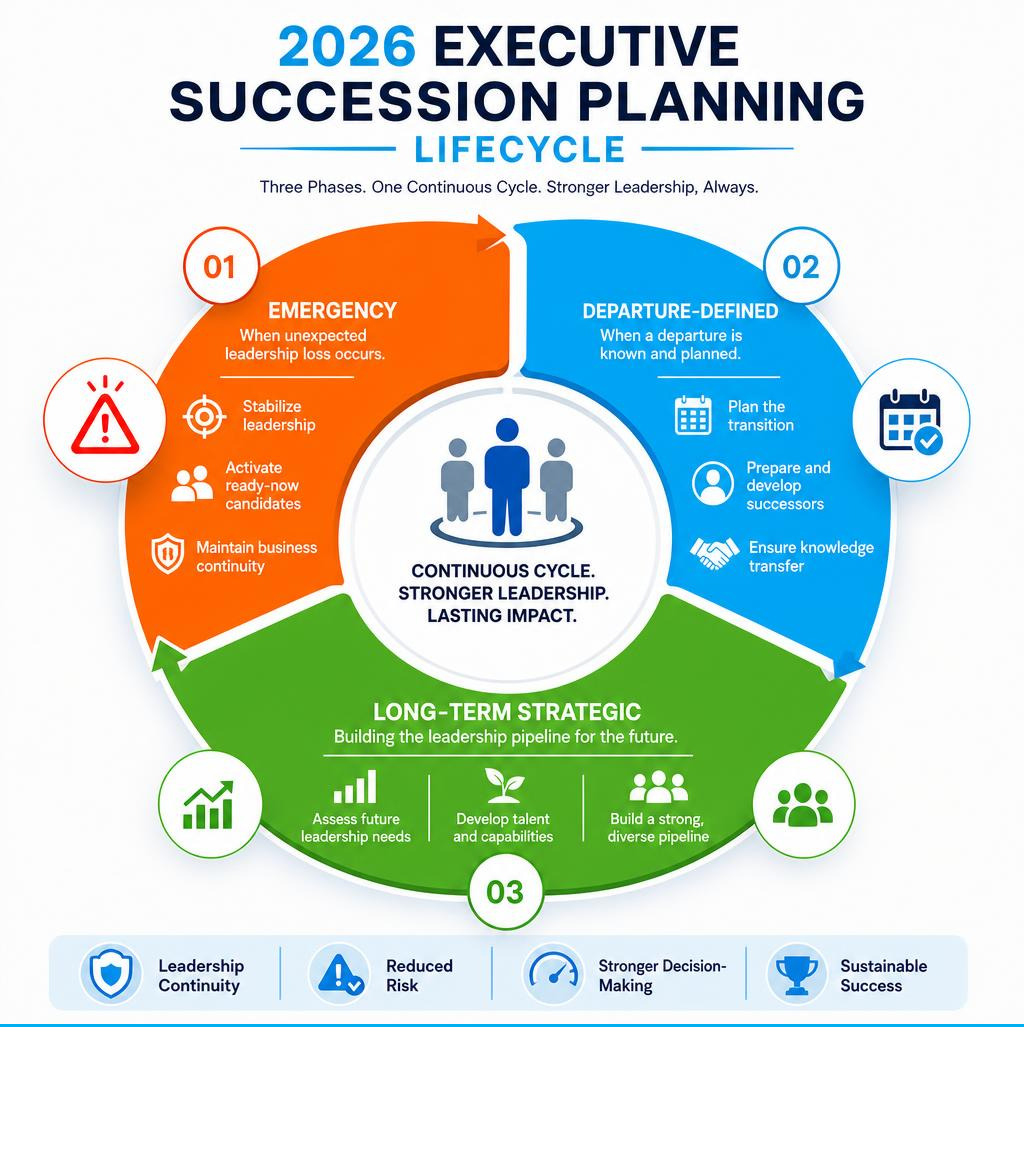
| Key types | Emergency, departure-defined (planned), and long-term strategic |
| Core benefit | Leadership continuity, reduced risk, and up to 30% greater competitive success |
The numbers are hard to ignore. Only 21% of HR teams have formal succession plans in place, yet an estimated 65 to 70 percent of nonprofit executives alone are planning to retire within the next five years. In the broader market, leadership gaps can freeze decision-making, shake investor confidence, and cost organizations millions in lost productivity.
This isn’t a distant risk. It’s happening right now — driven by a wave of Baby Boomer retirements that researchers have called the “Silver Tsunami.” Senior leaders are exiting faster than most organizations are building the pipelines to replace them.
The good news? Organizations that treat succession as an ongoing leadership discipline — not a one-time event — are the ones that stay ahead. Companies that plan ahead for succession can be up to 30% more successful than competitors who don’t.
This guide will walk you through exactly how to build that kind of resilient leadership pipeline — from identifying critical roles to developing ready-now successors through executive coaching and structured development.
I’m Andrew Botwin, founder of Strategy People Culture, LLC, where I combine business strategy, HR expertise, and ICF-credentialed executive coaching to help business leaders build stronger teams and prepare for confident leadership transitions — including executive succession planning at every stage of organizational growth. Whether you’re navigating a planned CEO departure or building a long-term bench of ready leaders, the framework ahead will give you a practical path forward.
The Strategic Imperative of Executive Succession Planning
Many organizations treat leadership transitions as a bridge to cross only when they reach it. However, waiting for an executive to announce their retirement or accept a competitor’s offer before you start planning is a high-stakes gamble. True strategic resilience requires a proactive approach to talent development and a robust performance culture.
Why Executive Succession Planning is Critical for Modern Organizations
When a key executive departs unexpectedly, the fallout can be swift and severe. For-profit companies risk immediate financial impact, with unplanned CEO departures historically causing a 10% to 20% decline in stock price and millions of dollars in lost market capitalization. In the nonprofit sector, where 68% of organizations lack a succession plan, a sudden leadership vacuum can threaten service continuity, compromise donor relationships, and stall critical community initiatives.
Beyond financial and operational risks, robust succession planning is a cornerstone of stakeholder confidence. Boards, investors, donors, and employees need to know that an organization is built to outlast any single individual. When you proactively prepare for transitions, you establish a baseline of trust. Employees feel secure in their career paths, and external partners remain confident in your long-term viability.
At its core, succession planning is an exercise in Good Leadership. It demonstrates foresight, strategic responsibility, and a commitment to organizational sustainability. Furthermore, building a clear transition roadmap reinforces transparency, which is exactly Why is Trust Important in Leadership?—it binds your team together during times of change and ensures that organizational momentum is never lost.
The Three Pillars of Executive Succession Planning
An effective executive succession planning strategy does not rely on a single, rigid document. Instead, it encompasses three distinct types of plans designed for different horizons and scenarios.
| Succession Plan Type | Focus & Time Horizon | Key Trigger | Primary Objective |
|---|---|---|---|
| Emergency Succession | Immediate (30 to 90 days) | Sudden illness, death, or abrupt resignation | Business continuity and interim leadership stabilization |
| Departure-Defined (Planned) | Mid-term (12 to 18 months) | Announced retirement or planned transition | Smooth knowledge transfer and gradual handoff of duties |
| Long-Term Strategic | Continuous (3 to 5+ years) | Ongoing organizational growth and evolution | Developing a deep, diverse talent pipeline for the future |
While emergency planning keeps the lights on during a crisis, long-term strategic planning ensures the organization can thrive in a volatile market. Yet, despite its clear importance, Only 8% of board directors indicate that their organization has proactively planned CEO succession five years out.
This gap highlights a widespread lack of Leadership Accountability in Business. Boards must move past short-term replacement planning and commit to a continuous five-year outlook that aligns talent development with the future strategic direction of the business.
Building a Diverse, Ready-Now Leadership Pipeline
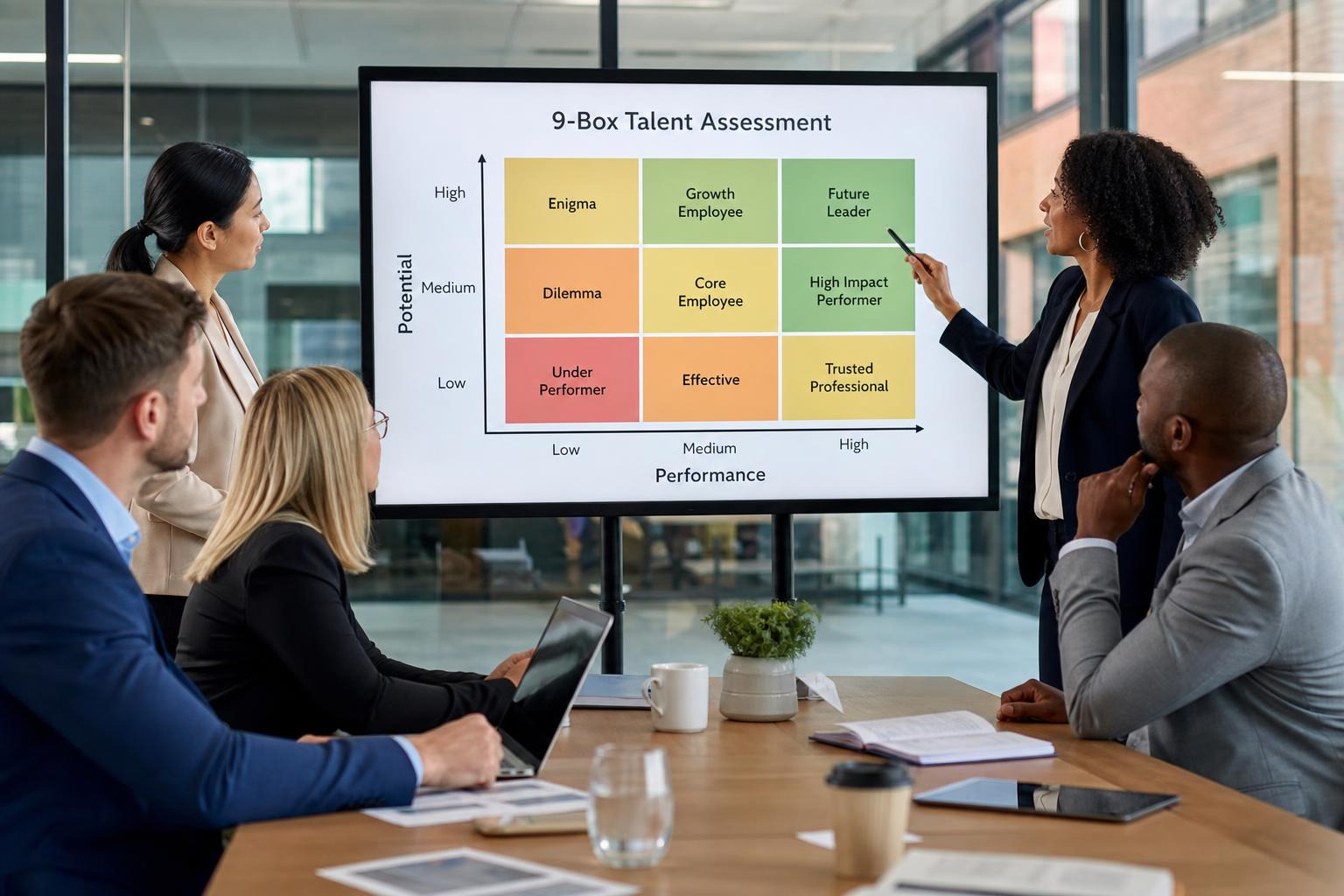
Building a leadership bench requires a systematic approach to identifying critical roles and assessing internal talent. This is not about choosing a single “heir apparent”—a practice that can spark political friction and breed a stagnant culture. Instead, organizations must focus on developing agile talent pools.
The process begins by identifying critical roles—not just by title, but by the impact their sudden vacancy would have on business continuity. Once these roles are mapped, HR leaders and boards can use tools like a competency matrix and the traditional 9-box grid to evaluate employees based on both current performance and future potential.
Using these tools helps organizations look beyond technical skills to evaluate a candidate’s Executive Presence and strategic agility. It also raises a fundamental question: Are Leaders Born or Made? At Strategy People Culture, we firmly believe they are made through intentional development, mentorship, and targeted coaching.
Encouragingly, Half of board directors indicate that if they had to replace their CEO tomorrow, an internal successor candidate would be named to the role. This represents a significant increase from previous years, showing that organizations are starting to recognize the massive value of cultivating internal talent. Investing in internal candidates preserves institutional knowledge, protects organizational culture, and significantly reduces onboarding times.
Integrating Executive Coaching and Manager-Led Development
A resilient leadership pipeline cannot be built by the HR department alone. It requires establishing a true coaching culture throughout the entire organization. High-potential employees need more than just classroom training; they need active, hands-on development that prepares them for the realities of executive leadership.
This is where professional development programs and structured coaching become invaluable. Our Leadership Management Development Guide emphasizes that long-term talent retention is directly tied to growth opportunities. By incorporating a tailored Introduction to Leadership Executive Coaching, emerging leaders can build the emotional intelligence, strategic thinking, and decision-making capabilities required at the highest levels.
Equally important is training current managers to coach their own teams. When senior leaders learn how to act as coaches, they naturally foster the next generation of talent. A critical component of this manager-as-coach model is mastering Delegation in Leadership. Managers who delegate effectively do not simply clear their own desks; they provide stretch assignments and real-world learning opportunities that allow their direct reports to grow.
Utilizing Leadership Coaching: Unlock Potential strategies ensures that your high-potential employees are actively developed every single day, creating a self-sustaining pipeline of ready-now talent.
Overcoming Barriers and Managing Planned vs. Emergency Transitions
Despite the clear benefits, organizations frequently run into barriers when implementing executive succession planning. Common hurdles include:
- Emotional and Political Friction: Outgoing executives may struggle to let go, or board members may avoid difficult conversations about retirement.
- The “One-Time Event” Fallacy: Treating succession as a document that sits on a shelf rather than an active, evolving process.
- A Narrow Focus: Planning only for the CEO role while ignoring critical operational and technical positions.
To overcome these barriers, boards and leadership teams must establish clear transition guidelines and maintain active engagement. Communication is key: transparent, carefully timed updates prevent rumors, stabilize staff morale, and reassure external partners.
During transitions, adopting a model of Collaborative Leadership can ease the handoff of power, ensuring that the outgoing executive, the board, and the successor work in alignment. Additionally, structured coaching during the onboarding phase can help a new executive identify and address potential organizational gaps early on. Knowing How to Fix Leadership Weaknesses during the transition period prevents minor operational friction from turning into a full-blown leadership crisis.
Conclusion: Securing Your Organization’s Future
Executive succession planning is not a luxury for a quiet day; it is a core business necessity. Whether you are navigating the immediate challenges of the “Silver Tsunami” in New Jersey or proactively building a five-year talent pipeline, the steps you take today will determine your organization’s resilience tomorrow.
At Strategy People Culture, LLC, based in East Hanover, New Jersey, we help organizations navigate these critical phases. Led by Andrew Botwin and his 25+ years of experience integrating HR consulting, executive coaching, and leadership training, we partner with you to build sustainable leadership pipelines, teach your managers how to coach, and ensure seamless executive transitions.
Do not wait for an unexpected departure to disrupt your momentum. Explore our Services – Executive Leadership Coaching to learn how we can help you secure your leadership pipeline and build a resilient future for your business.