
How Workplace Investigations Can Benefit Your Organization
Why Workplace Investigations Matter for Your Organization
The Benefits of Workplace Investigations extend far beyond simple compliance. They are a strategic tool for protecting your organization, building trust, and strengthening your culture. A well-executed investigation helps you mitigate risk, uphold organizational standards, improve company culture, enforce policies, and build employee trust. By taking concerns seriously, you enable better decision-making and prevent future issues by spotting underlying problems.
The reality is stark: unresolved workplace conflicts can cost an average of $40,000, not including hidden costs like lost productivity or damaged morale. Furthermore, managers spend an average of six hours per week addressing misconduct—valuable time diverted from strategic priorities.
The challenge for leaders isn’t whether to investigate, but how to do so effectively. A poor investigation creates new problems and destroys trust, while a well-executed one resolves issues and strengthens the organization.
I’m Andrew Botwin, founder of Strategy People Culture, LLC, and we have helped organizations steer complex workplace investigations while building stronger cultures and leadership teams. Throughout our work with business owners and executives, we have seen how the Benefits of Workplace Investigations extend well beyond compliance to become a cornerstone of effective leadership and organizational health.
The Strategic Benefits of Workplace Investigations for Leadership
For leaders, workplace investigations are proactive strategic tools that safeguard the organization’s future, not just reactive measures. They are integral to risk management, culture improvement, policy enforcement, and morale. A strategic mindset allows leaders to gain a 360-degree view, enabling better decisions and a healthier work environment, ultimately maximizing organizational success and profitability.
The immediate aim is to determine the facts. This clarity allows issues to be addressed head-on, revealing and correcting potential culture issues. This proactive approach enforces company policies and demonstrates they are taken seriously. Prompt and fair investigations also encourage open communication, helping identify trends and opportunities for policy improvements, ensuring your workplace remains fair and respectful.

Protecting the Organization and Its Resources
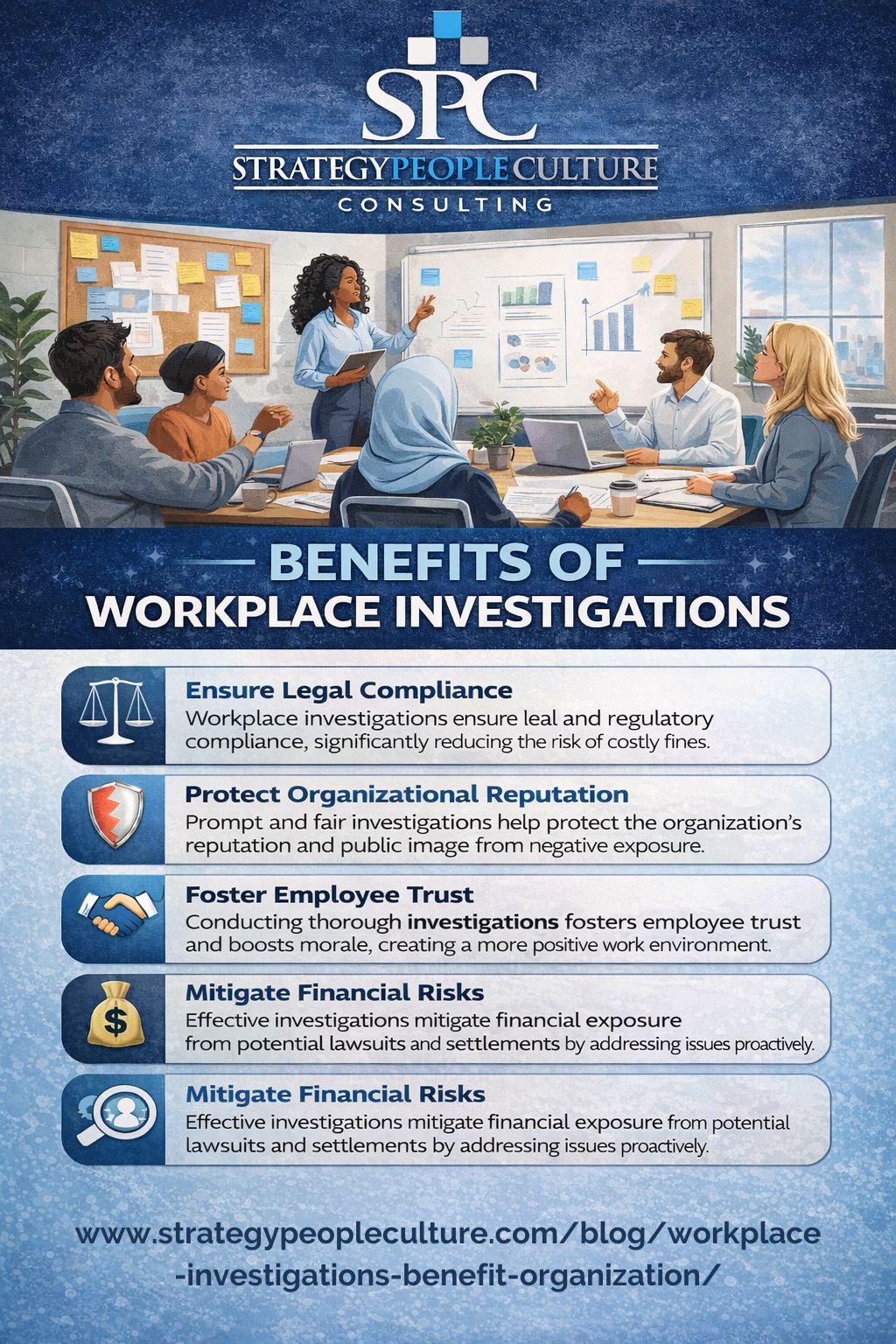
One of the most compelling Benefits of Workplace Investigations is the significant reduction of organizational risk and financial loss. A well-conducted investigation is a critical risk management tool against costly conflicts and reputational damage.
Unaddressed misconduct can be incredibly expensive. When management fails to act on complaints, the costs can be significant, sometimes reaching hundreds of thousands of dollars. Beyond these direct financial impacts, organizations also face indirect costs like decreased productivity, higher turnover, and reputational damage that can compound over time.
A thorough, impartial investigation demonstrates responsible leadership and can protect the organization if a conflict escalates. Best practices emphasize that leaders should “conduct a prompt, thorough and impartial investigation” when addressing complaints, underscoring the protective power of a well-documented process.
An investigation demonstrates that leadership decisions are based on objective facts, not bias. A properly documented finding provides a clear rationale for any actions taken. When misconduct is confirmed and addressed, it reinforces fairness and strengthens the organization’s integrity.
The Tangible Benefits of Workplace Investigations on Company Culture
Beyond legal protection, the Benefits of Workplace Investigations profoundly impact workplace culture. They are vital for cultivating a safe, respected, and productive environment where employees feel heard.
Investigations are an invaluable tool for identifying and correcting negative culture issues, often uncovering systemic problems or communication breakdowns. This provides an opportunity to address root causes and lead to lasting, positive and productive organizational changes.
Prompt, thorough, and impartial investigations build trust between employees and management. This reassures employees their concerns are taken seriously, fostering an environment where they feel comfortable reporting issues. By demonstrating fairness, leaders show their commitment to a just and equitable workplace, preventing morale issues that stem from perceived bias.
Moreover, when allegations of harassment or discrimination are investigated thoroughly, it sends a clear message that such behaviors are not tolerated, reinforcing company values and creating a safer space for all. For more insights on creating a positive culture, you can explore our resources on Racism Bias Hatred Divisiveness.
Enforcing Policies and Setting the Tone for Conduct
Company policies are the bedrock of organizational values and expected behaviors. Workplace investigations are the mechanism for enforcing them. A direct benefit is showing employees that policies are taken seriously and violations have consequences.
When an allegation arises, a thorough investigation determines if a policy was breached, reinforcing accountability. It communicates that standards exist and will be upheld. A single mishandled complaint can undermine the entire policy framework.
Consistently investigating and addressing problems sets the right tone for employee conduct and helps prevent future misconduct. Employees are more likely to adhere to guidelines when they know violations will be investigated and appropriate corrective action will be taken, from discipline to training. For example, effective investigations are crucial in enforcing policies around Sexual Harassment Discrimination Prevention. They demonstrate a commitment to protecting the team and upholding a respectful environment.
Executing an Effective Investigation: Process and Best Practices
Realizing the true Benefits of Workplace Investigations requires a well-defined process built on impartiality, thoroughness, and timeliness, all carefully documented. A poorly executed investigation can exacerbate problems and erode trust. An investigation is a fact-gathering process, not an interrogation, and requires a delicate balance of empathy and objectivity.
The Core Components of a Fair and Credible Investigation
A fair, credible investigation is the cornerstone of conflict resolution, providing a 360-degree view for informed decisions. The core components include:
- Impartiality: This is paramount. Best practices emphasize the importance of impartiality in workplace investigations. The investigator must be neutral and objective, as any hint of bias undermines the process and leaves open exposure to the organization if the validity of the investigation is ever challenged by an opposing party.
- Thoroughness: An investigation must uncover all relevant facts. This involves interviewing all parties, reviewing all evidence (documents, emails, etc.), asking open-ended questions, and following up on all leads.
- Timeliness: Investigations should be initiated promptly. Delays can cause loss of evidence, fading memories, and suggest the complaint isn’t being taken seriously.
- Objectivity: The investigator’s goal is to uncover facts and determine if a policy violation occurred.
- Confidentiality (to the extent possible): Protecting the privacy of all parties as much as possible encourages reporting without fear of negative consequences.
These components ensure you gather accurate information and maintain the integrity of your workplace. For a deeper dive, consider our insights on a Clear Internal Investigation Process.

The Critical Benefits of Workplace Investigations Documentation and Follow-Up
The value of an investigation extends beyond its conclusion to meticulous documentation and thoughtful follow-up, which serve both protective and proactive purposes.
Thorough documentation creates a clear record of the process. A comprehensive record demonstrates a leader’s commitment to a prompt and fair process, which is invaluable for organizational integrity. This documentation should include:
- The initial complaint.
- The investigation plan.
- Evidence collected.
- Analysis of findings and credibility assessments.
- Conclusions reached.
- Records of all corrective actions taken.
- Communication to involved parties.
Investigation files should be maintained confidentially, with only disciplinary or corrective actions included in personnel files.
Beyond protecting the organization, documentation is vital for continuous improvement, helping identify patterns in misconduct. These insights allow you to proactively address systemic problems and implement policy improvements.
Finally, post-investigation action—implementing changes, monitoring the environment, and preventing negative repercussions—is crucial to prevent recurrence and turn risks into opportunities for organizational growth.
When to Engage a Third-Party Investigator
While internal investigations are often appropriate, engaging a third-party investigator offers significant Benefits of Workplace Investigations in certain situations. This strategic decision can improve credibility and reduce bias.
One major advantage is impartiality. Internal teams can face perceived or actual bias due to existing relationships or organizational politics. An external investigator has no prior relationship with the parties, ensuring a neutral review. This is critical when allegations involve senior leadership or HR.
Outsourcing also alleviates the burden on internal resources, allowing your team to focus on their primary roles. We recommend engaging a third-party investigator in these scenarios:
- Allegations against senior leadership or HR: To avoid any conflict of interest.
- Complex or highly sensitive cases: Involving complex policy or ethical questions or multiple parties.
- Lack of internal resources or expertise: If your team cannot handle a case promptly or competently.
- To improve credibility: An independent review instills greater confidence in the outcome.
- When a complaint has been mishandled internally: To provide a fresh, unbiased perspective.
Leveraging third-party expertise ensures integrity, reinforces a commitment to fairness, and strengthens organizational health.
Conclusion: Changing Risk into Opportunity
The Benefits of Workplace Investigations show they are not mere administrative tasks but indispensable tools for proactive leadership. They are essential for cultivating organizational health, building a resilient culture, and gaining a strategic advantage.
For leaders, effective investigations turn risks—such as costly conflicts, damaged morale, and a toxic culture—into opportunities for growth. This commitment to transparency and accountability upholds organizational standards and shapes a workplace where trust thrives, policies are respected, and concerns are heard.
At Strategy People Culture, we view investigations as a vital component of leadership development and organizational success. They provide critical insights to identify both isolated and systemic issues, refine policies, and foster an inclusive, respectful environment. By integrating robust investigation practices into your leadership toolkit, you ensure your organization is not just compliant, but also vibrant, ethical, and prepared for the future.
Invest in effective workplace investigations today to strengthen the integrity and success of your organization. Learn more about our Workplace Investigations services and how we can help your organization in New Jersey steer these complexities with confidence.