Coaching Skills Every Manager Needs

Why Every Manager Needs Coaching Skills (Not Just Executive Coaches)
Often, it is not a lack of care. It is a lack of structure, time, confidence, and the right language for difficult conversations. That gap can quietly hurt engagement, retention, performance, and your leadership pipeline, which makes manager coaching an imperative need.
Strategy People Culture, LLC helps managers turn everyday conversations into practical coaching and mentoring moments. With the right guidance, managers can listen better, ask sharper questions, give feedback that lands, and build the trust employees need to grow.
Here’s a quick breakdown of what this article covers:
| Question | Quick Answer |
|---|---|
| What is manager coaching? | A shift from directing work to developing people through questions, feedback, and support |
| Coaching vs. mentoring? | Coaching is short-term and skill-focused; mentoring is long-term and career-focused |
| Why does it matter? | Teaching managers coaching techniques boosts their performance by 20–28% |
| Who benefits? | Managers, their direct reports, and the entire organization |
| What skills do managers need? | Active listening, powerful questioning, constructive feedback, and psychological safety |
Most managers are promoted because they’re great at their job — not because they know how to develop other people. In fact, 53% of workers feel their manager lacks the skills to support their career growth. And only 37% of new supervisors receive any training when promoted.
That gap is expensive. It shows up as disengagement, turnover, and stalled leadership pipelines.
The good news: coaching skills can be learned. And when managers learn them, the results are measurable — for their teams, their organizations, and themselves.
I’m Andrew Botwin, founder of Strategy People Culture, LLC, and I’ve spent years helping business owners build stronger leadership teams through executive coaching, HR strategy, and practical coaching and mentoring for managers at every level. If your managers are struggling to develop their people — or if you’re trying to build a leadership pipeline that doesn’t depend on a single person — this guide was written for you.
The Strategic Value of Coaching and Mentoring for Managers

As we look at the workplace landscape of May 2026, the traditional model of the directive “command-and-control” manager is officially obsolete. Rapid technological shifts and evolving employee expectations have changed what it means to lead. Today, the role of a manager is to unlock the potential of their team members, transforming them from passive task-executors into proactive problem-solvers.
Developing internal coaching and mentoring capabilities is a strategic necessity for building robust leadership pipelines. When organizations treat leadership development as an ongoing, relational process rather than a one-off classroom event, they secure their future. Organizations that fail to teach their managers these relational skills face a harsh reality: high turnover, disengaged teams, and a lack of leadership depth when it comes time for succession planning.
By equipping managers with coaching skills, we shift the organizational dynamic from dependency to autonomy. Instead of running to their manager for every answer, employees learn to trust their own decision-making. This frees up executive leaders to focus on high-level strategy, driving sustainable organizational development.
Coaching vs Mentoring for Managers: Key Differences in Team Development
While often used interchangeably, coaching and mentoring are distinct tools that serve different purposes in a manager’s toolkit. Confusing the two can lead to misaligned expectations and wasted resources.
- Coaching is typically a structured, time-bound intervention focused on specific skill acquisition or performance improvements. It is highly contextual and task-oriented. For example, a manager might coach an employee over a 90-day period to improve their client presentation skills or to master a new software platform.
- Mentoring is a longer-term, relationship-driven process focused on overall career trajectory, organizational wisdom, and personal growth. A mentor shares their personal experiences, provides perspective on navigating company politics, and acts as a sounding board for long-term career aspirations.
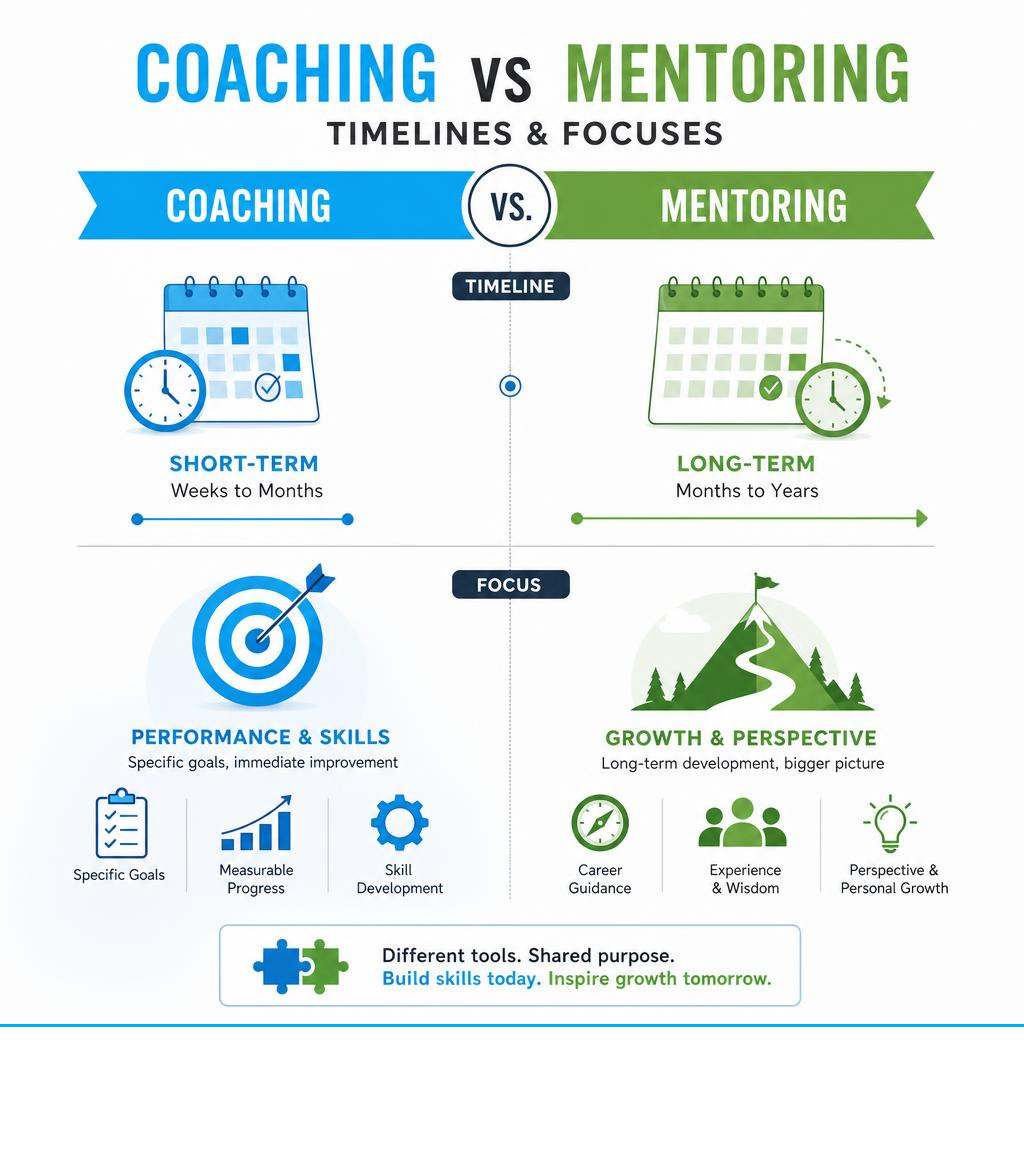
To help you decide which approach to deploy, consider this comparison:
| Parameter | Coaching | Mentoring |
|---|---|---|
| Primary Focus | Specific skills, performance gaps, and immediate tasks | Long-term career growth, values, and organizational wisdom |
| Timeframe | Short-term and time-bound (e.g., 3 to 6 months) | Long-term and ongoing (often spanning years) |
| Relationship Dynamic | Collaborative inquiry; manager guides employee to find answers | Advice-driven; mentor shares direct personal experiences |
| Key Outcome | Accelerated performance and behavioral change | Increased retention, professional maturity, and career growth |
Both approaches are vital, but they yield different returns. For targeted performance enhancement, executive coaching is highly effective. In fact, research shows a 6x average ROI on coaching investment for organizations that commit to structured programs. To explore how targeted coaching can transform your top tier, read about the Benefits of Executive Coaching.
Essential Coaching Skills Every Manager Needs to Master
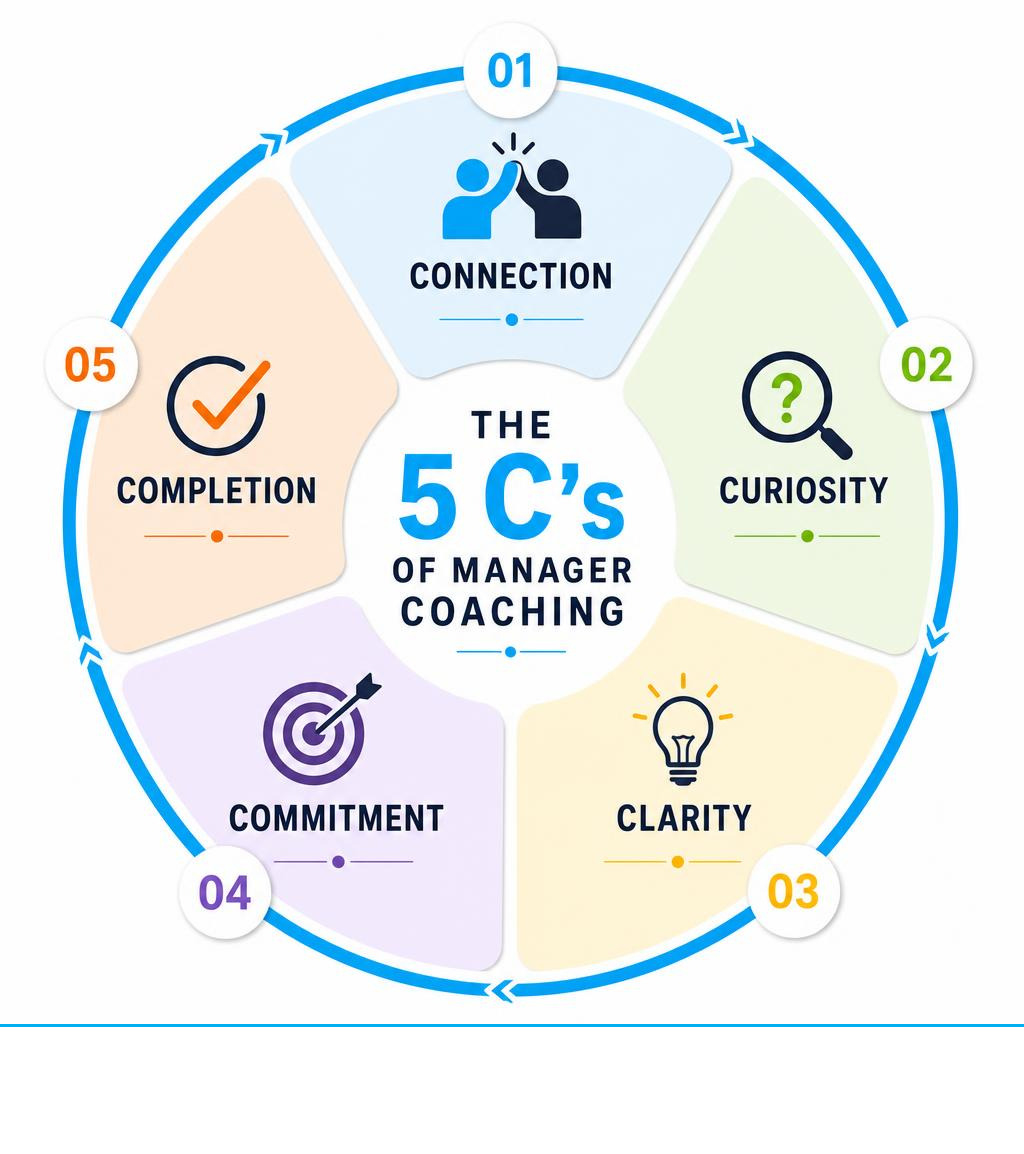
To transition from a traditional boss to a manager-as-coach, leaders must develop a core set of relational skills. These are not soft, optional skills; they are the foundation of high-performing teams.
1. Active Listening
Most managers listen to respond or to fix. A coaching manager practices deep, active listening—listening to understand. This means paying attention to what is left unsaid, sensing the employee’s emotions, and resisting the immediate urge to offer a solution. Discover how to refine this skill by reading our guide on Listening to Improve Leadership Skills.
2. Powerful Questioning
Instead of telling employees what to do, coaching managers ask open-ended, thought-provoking questions. Instead of saying, “You should do it this way,” try asking:
- “What do you think is the right approach here?”
- “What are the potential roadblocks you foresee?”
- “What support do you need from me to make this successful?”
This simple shift builds critical thinking and transfers ownership of the solution to the employee.
3. Constructive Feedback
Feedback should not be a dreaded annual event. Coaching managers provide real-time, constructive feedback that focuses on behavior and growth rather than criticism. It is specific, actionable, and delivered in a supportive manner.
4. Psychological Safety
None of these skills matter if your employees do not feel safe to fail, speak up, or try new things. Establishing psychological safety is the single most critical factor in team performance. When employees know they won’t be punished for a well-intentioned mistake, they innovate and take accountability. For a deeper dive into this dynamic, see Why Psychological Safety is the Missing Piece in Employee Performance.
Integrating Coaching and Mentoring for Managers into Succession Planning
A healthy organization always looks one step ahead. Succession planning is not just about identifying a replacement for the CEO; it is about building a continuous leadership pipeline at every level of the business.
By training your middle and frontline managers to coach, you naturally accelerate the development of high-potential employees. These managers become talent developers, identifying future leaders early and preparing them for promotion. This structured knowledge transfer ensures that when a key leader departs, there is a capable, confident successor ready to step into the role.
This proactive approach pays off: organizations prioritizing this alignment report up to 70% of coached managers reporting improved work performance. To understand how to position coaching at the center of your talent strategy, explore our Introduction to Leadership and Executive Coaching.
Creating a Coaching Culture and Measuring Business Impact
Many organizations treat coaching as a corrective tool reserved for underperforming employees. This is a missed opportunity. To reap the full business benefits, organizations must build an intentional coaching culture where development is woven into daily operations.
A true coaching culture impacts key business metrics:
- Employee Engagement: Employers with strong coaching cultures report 60% higher employee engagement scores than those without.
- Retention: Engaged employees who receive career support are 20% more likely to stay at their organization, drastically reducing recruitment costs.
- Profitability: Highly engaged teams show 21% greater profitability.
To measure the ROI of your initiatives, look beyond superficial satisfaction surveys. Track retention rates, promotion readiness metrics, and team-specific productivity goals before and after implementing coaching programs. If you are ready to design a culture that sustains these behaviors, read more about managing your Workplace Culture or consult our comprehensive Leadership Management Development Guide.
The Role of AI and Modern Tools in Manager-Led Coaching
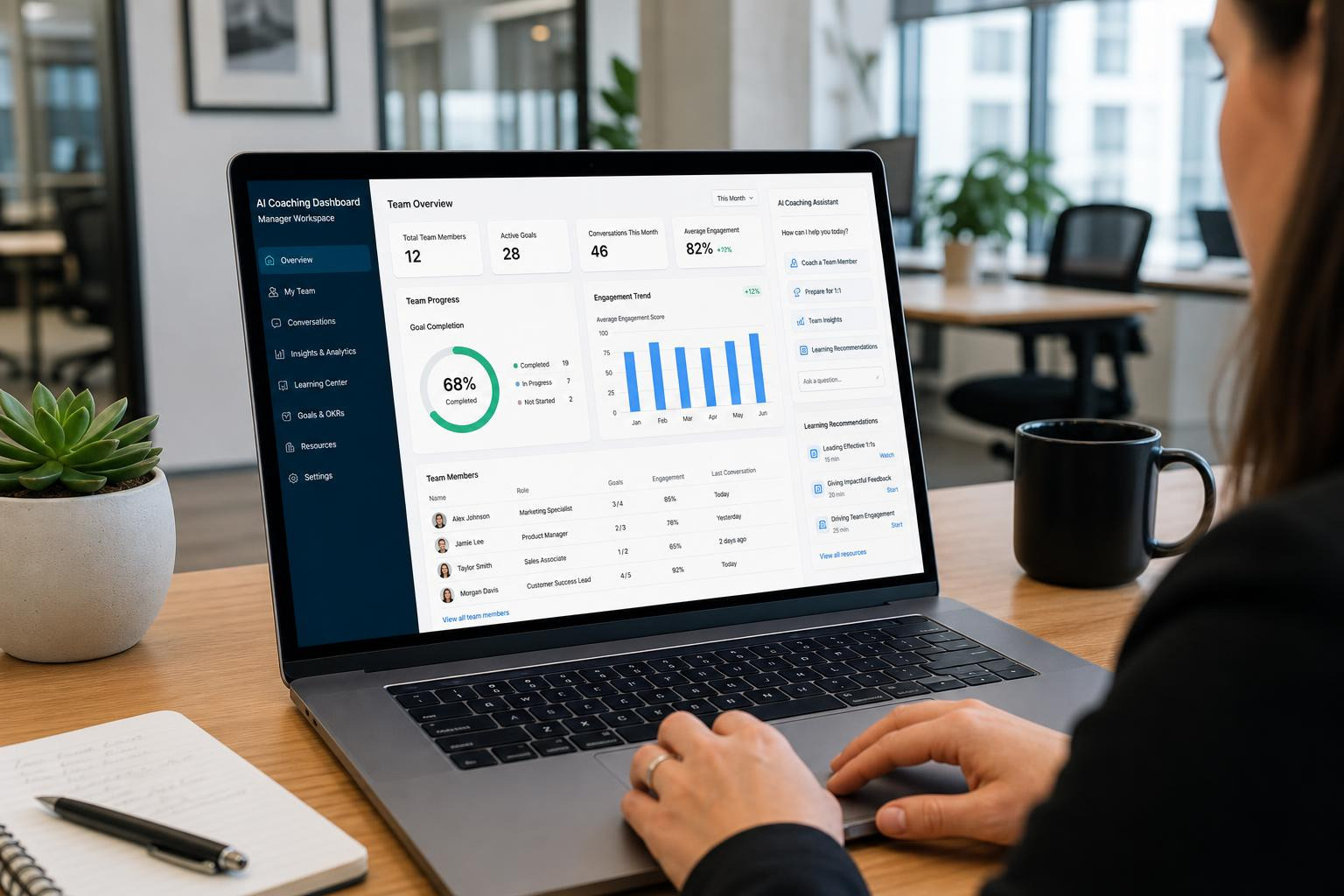
In May 2026, technology plays a supportive role in how we scale coaching across organizations. AI-driven platforms and modern digital tools are not replacing the human connection of coaching; instead, they are making it more accessible and scalable.
AI tools can support manager-led coaching by:
- Providing Just-in-Time Prompts: Offering managers quick question frameworks or feedback templates right before a 1:1 meeting.
- Scalable Learning Modules: Delivering bite-sized, micro-learning content to busy managers, allowing them to practice coaching skills in just 20 to 30 minutes a week.
- Supporting Hybrid Teams: Helping remote managers track development goals and maintain consistent, documented coaching touchpoints across dispersed teams.
Using these modern tools allows organizations to democratize coaching, ensuring that development is not just a luxury for senior executives but a daily reality for every employee. To learn more about unlocking this modern potential, view our insights on Leadership Coaching to Unlock Potential.
Building a Sustainable Leadership Pipeline

Teaching your managers how to coach is not just a nice-to-have training initiative—it is a core business strategy. When managers shift from directing tasks to developing people, they build autonomous, resilient, and highly engaged teams that drive bottom-line success.
At Strategy People Culture, LLC, we understand that real behavioral change requires more than a single training day. Led by Andrew Botwin and backed by over 25 years of enterprise executive leadership, we specialize in helping businesses in East Hanover, NJ, and throughout New Jersey build intentional cultures. We seamlessly integrate HR consulting, executive coaching, leadership training, and organizational development to foster growth and success for both your people and your business.
Ready to transform your managers into powerful coaches and secure your leadership pipeline?
Partner with Strategy People Culture for Executive Leadership Coaching Services today.