
The 10 Principles of Ted Lasso Management
The Lasso Effect on Modern Leadership
Ted Lasso management lessons offer a refreshing blueprint for modern leadership that prioritizes people over performance metrics which will ultimately lead to stronger organizations and, steady cultures with superior results. Here’s what business leaders can learn from the fictional coach who transformed a struggling soccer team through empathy, trust, and authentic connection:
| Core Lesson | What It Means | Business Impact |
|---|---|---|
| Lead with Positivity | Maintain optimism while acknowledging reality | Creates resilient teams and reduces burnout |
| Practice Empathy | Understand personal struggles behind professional challenges | Builds deeper trust and loyalty |
| Accept Vulnerability | Share your own challenges openly | Fosters psychological safety and innovation |
| Build Trust | Be honest, reliable, and consistent | Enables open communication and collaboration |
| Focus on Growth | Develop people, not just skills | Improves retention and succession planning |
| Be a Goldfish | Learn from mistakes without dwelling | Encourages risk-taking and adaptability |
| Listen Actively | Understand before being understood | Surfaces better solutions faster |
| Celebrate Diversity | Value unique perspectives and backgrounds | Drives innovation and market relevance |
| Prioritize Well-being | Put people’s health before wins | Increases engagement and performance |
| Lead by Example | Model the behavior you expect | Creates authentic, values-driven culture |
When Apple TV’s Ted Lasso debuted, audiences saw more than a comedy; they saw a leader who challenged traditional, command-and-control management. Ted Lasso demonstrated a radically different approach: leading with heart wins.
The challenge is that most leadership programs haven’t adapted. Organizations still face high turnover and disengagement, often because leaders are promoted for technical expertise but lack essential people skills.
Ted’s approach is backed by research. Companies with strong coaching cultures see better financial performance, and coached leaders feel more accountable. His methods, rooted in empathy and authenticity, are proven to make teams perform.
The lessons from AFC Richmond’s locker room translate directly to the boardroom. Ted’s principles offer practical strategies for building stronger, more resilient teams at any level of an organization. This isn’t about ignoring performance. It’s about understanding that the person comes before the professional and creating an environment where people feel safe to take risks, admit mistakes, and grow—the foundation of innovation and sustained performance.
I’m Andrew Botwin, founder of Strategy People Culture, LLC. At SPC, we help leaders apply these same Ted Lasso management lessons to build cultures where empathy and accountability coexist. Through executive coaching and leadership development, we have seen how these principles create measurable business results. We do not force the Ted Lasso style on every leader nor every organization; rather, we take pieces from many different management styles to help our clients challenge their own norms and grow into stronger leaders.
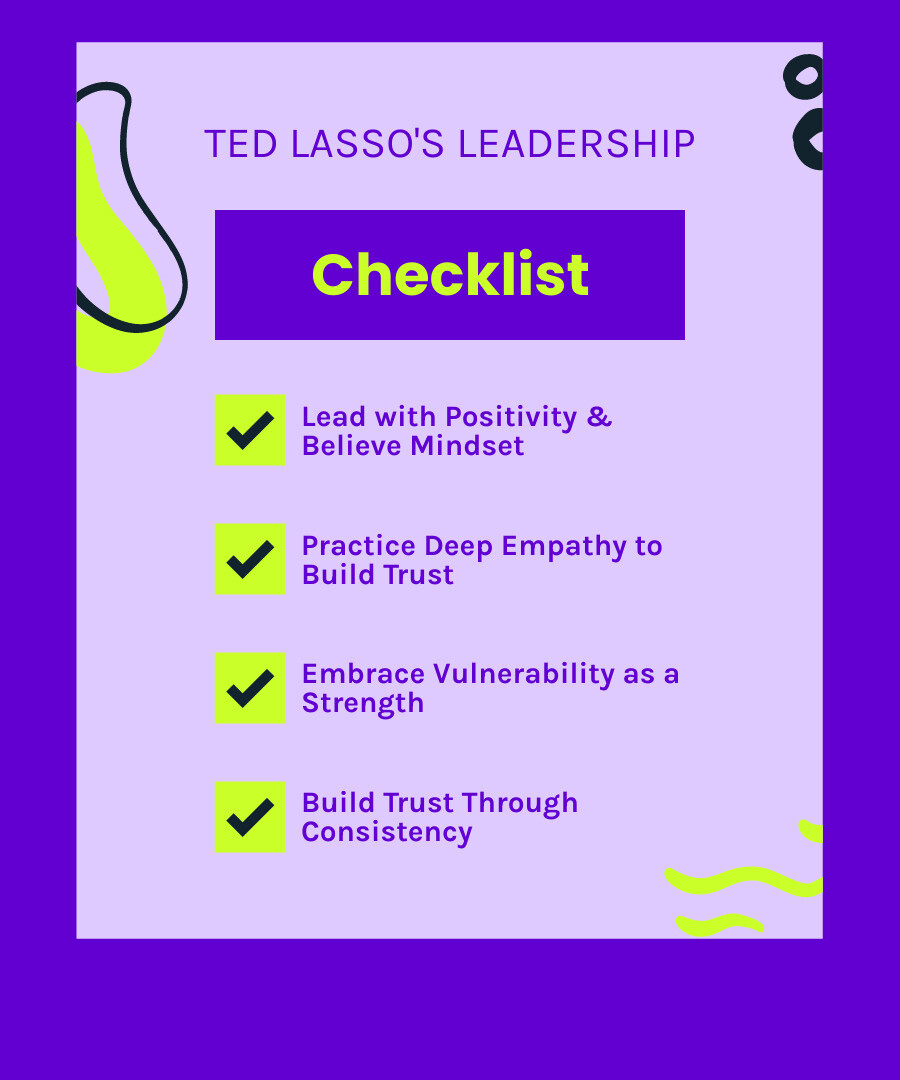
The 10 Core Ted Lasso Management Lessons
Ted Lasso’s leadership style challenges traditional norms of authority. He is an empathetic, collaborative leader who sees value in everyone, lifts overlooked voices, and motivates his team effectively. Let’s explore the core principles of his approach.
The Foundation: Positivity, Empathy, and Vulnerability
At the heart of Ted’s success is his understanding of human nature and the power of a supportive environment where people feel valued, understood, and safe.
Positivity and the ‘Believe’ Mantra
Ted’s positivity is a cornerstone of his leadership. Despite facing ridicule as an American coach in English soccer, his unwavering optimism, rooted in a growth mindset, chipped away at cynicism. His iconic “Believe” sign became a daily reminder of faith in oneself and the team. For leaders, this means setting a clear vision and inspiring belief in collective capabilities. As a Gallup report highlights, hope accounted for 56% of the attributes mentioned by people surveyed as a key leadership need. Instilling hope creates a more resilient and engaged workforce.
Empathy: Understanding the Whole Person
Ted shows that effective leadership means understanding the person first, to effectively strengthen the professional. He demonstrates profound empathy by taking time to understand the individual struggles of his team, approaching each with curiosity, not judgment. This fosters deep trust and loyalty. Understanding what makes each team member tick is an essential leadership tool. As we emphasize in our work on Emotional Intelligence in Leadership, this allows leaders to connect on a deeper level and create a supportive environment.
Vulnerability: A Strength, Not a Weakness
Ted’s willingness to be vulnerable is a powerful leadership trait. By openly struggling with personal challenges like panic attacks, he strengthens his authority. This creates an environment where others feel safe to be vulnerable, fostering psychological safety where team members feel comfortable taking risks and seeking help. As we explore in our insights on Psychological Safety at Work, this is critical for employee performance. Vulnerable leaders reduce stigma and empower their teams, driving innovation and resilience.

Building the Team: Trust, Collaboration, and Personal Growth
Ted knows a strong team is built on trust, collaboration, and a commitment to mutual growth, not just individual talent.

Building Trust Through Consistency and Honesty
Ted builds trust through consistent effort and action. From daily biscuits for Rebecca to unwavering honesty with players, he demonstrates reliability and integrity. This consistency creates an environment where open communication flourishes. For leaders, this means aligning actions with values and earning trust by listening and acting with integrity. As we discuss in Why is Trust Important in Leadership?, trust is the currency of effective leadership and the foundation of a high-performing team.
Collaboration and the Power of the Diamond Dogs
Ted fosters collaboration by soliciting input from everyone, regardless of status. His “Diamond Dogs” sessions exemplify this, creating a space for open discussion. This inclusivity is seen when Nate, the Assistant Kit Man, is encouraged to offer tactical insights, proving good ideas can come from anywhere. By welcoming diverse perspectives, leaders can leverage collective wisdom. Our insights on Collaborative Leadership show that such environments boost innovation and team performance.
Focusing on Personal Growth and Development
Ted is committed to personal growth, seeing potential where others don’t. He empowers Nate’s journey from kit man to coach and guides Roy Kent’s transition from player to mentor. This focus on the whole person, not just their output, cultivates loyalty and improves team performance. This “whole-person approach,” which we advocate in Developing the Whole Person in Leadership Training, recognizes that personal and professional growth are interconnected.
The ‘Believe’ Mindset: Practical Ted Lasso Management Lessons on Resilience
The journey to success is rarely linear, and Ted Lasso’s leadership style is a masterclass in navigating setbacks and learning from failure.

Resilience: “Be a Goldfish”
Ted’s advice to “be a goldfish” encapsulates his approach to resilience: learn from mistakes but don’t dwell on them. He consistently models the ability to bounce back from challenges while maintaining a positive outlook. This resilience is crucial for leaders, as setbacks are inevitable. Ted teaches us to view challenges as growth opportunities. Our resources on Resilient Leadership underscore how vital this trait is for inspiring perseverance through uncertainty.
Growth Mindset and Adaptability
Ted’s journey as a football coach in a new sport is a testament to a growth mindset. He wasn’t afraid to learn, ask questions, and adapt, encouraging a similar mindset in his team. His leadership fosters an environment where mistakes are learning opportunities. This adaptability is critical in today’s business world. Ted shows that leaders don’t need all the answers; they need to cultivate a culture where everyone is empowered to find them.
Conflict Management and Active Listening
Ted handles conflict with directness, empathy, and humor. To manage the rivalry between two of his star players, Jamie Tartt and Roy Kent, he normalizes conflict and facilitates dialogue. A key component is active listening; Ted listens to understand, not just to reply. By asking open-ended questions, he addresses underlying issues. Learning how to have a difficult conversation with an employee with tact is a critical skill. Our insights on Listening to Improve Leadership Skills highlight its importance for managing conflict and building rapport.
The Impact: Applying Ted Lasso Management Lessons for Lasting Success
The true measure of Ted’s leadership is the lasting impact he has on those around him, which translates directly to sustainable business success.
Prioritizing Team Well-being
Ted prioritizes his team’s well-being above immediate results. This “people first” commitment creates a loyal and engaged workforce. When employees feel cared for, their motivation and retention soar. In contrast to burnout cultures, Ted shows that a supportive environment where health is valued leads to greater long-term success.
Leading by Example with Authenticity
Ted’s most powerful trait is leading by example. He embodies the values he preaches—kindness, integrity, and resilience. His authenticity inspires others to be their best. For leaders, this means aligning actions with words. As we explore in our discussions on Good Leadership, authentic leaders build trust and create a culture where everyone is inspired to contribute.
Celebrating Diversity for Innovation
Ted actively celebrates his team’s diversity, understanding that varied perspectives lead to stronger solutions. This is shown in his support for Sam Obisanya’s ethical protest. By fostering an inclusive environment where every voice is heard, Ted cultivates creativity. Our insights into Diversity in Leadership highlight how crucial this is for building dynamic organizations.
Practical Application for Business Leaders
How can leaders apply these Ted Lasso management lessons? It’s about a fundamental shift in mindset. Here are three immediate actions you can take:
- Prioritize Empathy and Active Listening: Schedule one-on-one time with your team. Go beyond work tasks; ask about their well-being and aspirations. Listen with genuine curiosity.
- Foster Psychological Safety: Create an environment where mistakes are learning opportunities. When you model vulnerability, your team will feel safer to take risks and innovate.
- Invest in Personal Growth: Understand each team member’s strengths and ambitions. Provide opportunities for development and mentorship that align with their goals.
Applying the Lasso Way: From AFC Richmond to Your Organization
The story of AFC Richmond is a powerful reminder that leadership is about people. It’s about fostering a positive culture, building trust, and leading with empathy. These Ted Lasso management lessons are practical, research-backed strategies for creating high-performing organizations.
At Strategy People Culture, LLC, we equip modern leaders with these very skills. Our executive coaching and leadership training programs help leaders cultivate the emotional intelligence and strategic vision needed to drive measurable results. Just as Ted transformed his team, we help leaders transform their organizations into environments where people and businesses flourish.
For a deeper dive, explore An Analysis of Executive Leadership Coaching in Sports. If you’re ready to adopt the Lasso Way, we invite you to transform your leadership style with Executive Coaching and open up your team’s full potential.