
7 Leadership Lessons From Sports That Are Proven to Inspire
Why Leadership Lessons from Sports Matter More Than Ever
Leadership lessons from sports provide some of the most practical and proven strategies for building high-performing teams in business. Here’s what you need to know:
Core Leadership Principles from Sports:
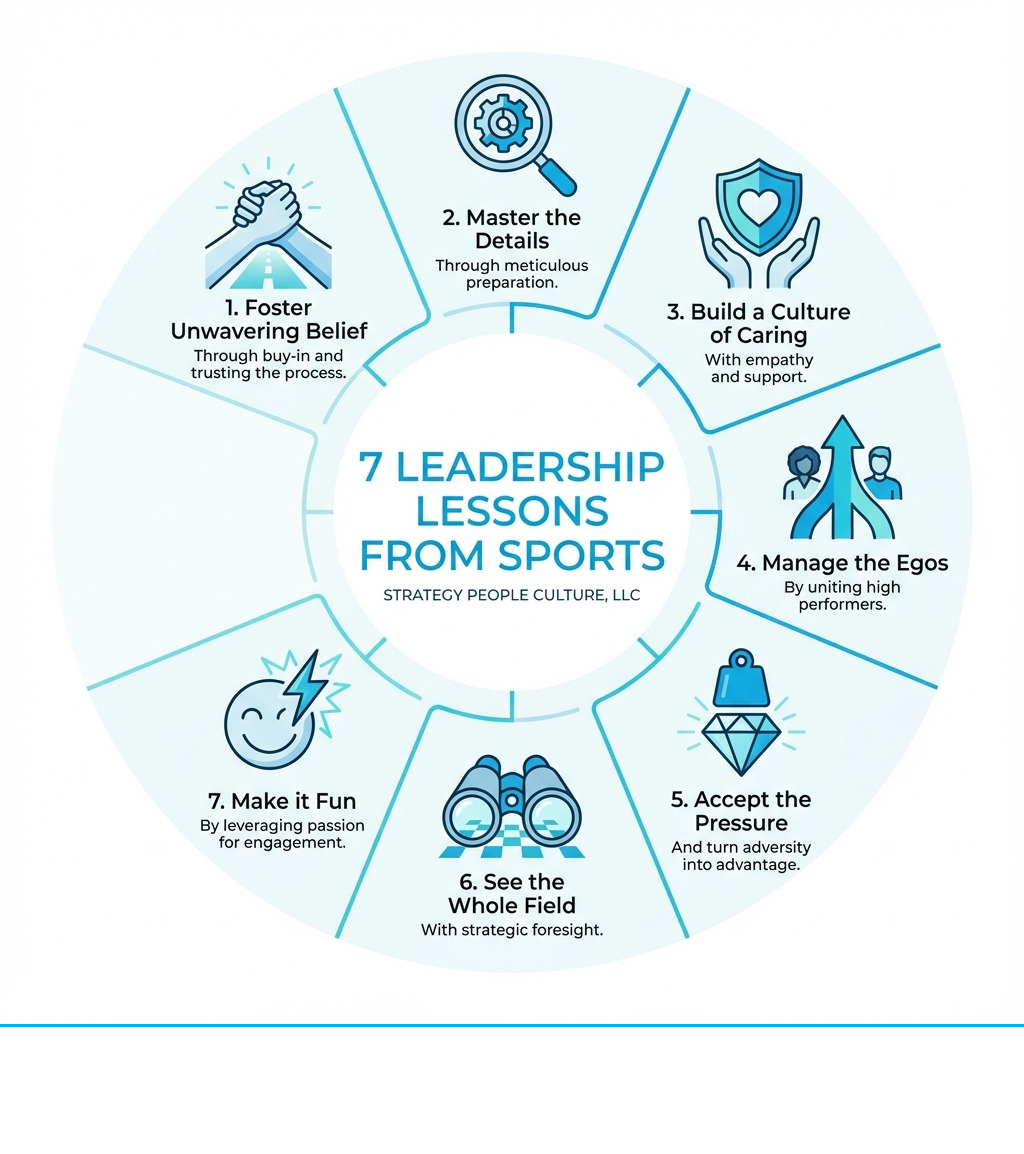
- Buy-in and belief – Great coaches get every team member to trust the process and commit to shared goals
- Attention to detail – Champions prepare carefully and execute flawlessly under pressure
- Culture of caring – The best leaders genuinely invest in their people’s growth and well-being
- Managing egos – Elite teams channel individual talent toward collective success
- Embracing pressure – Top performers view adversity as privilege, not burden
- Strategic thinking – The best players see the whole field and anticipate what’s coming next
- Passion and fun – Teams that enjoy the game together perform at their highest levels
The parallels between sports and business are striking. Both operate in high-stakes environments with clear metrics for success. Both require coordinating diverse talents toward a common goal. And in both, leadership is the differentiator between good teams and championship teams.
Think about it 90% of employees who work at companies that have a strong sense of purpose say they’re more motivated, loyal, and inspired. That’s exactly what great coaches create on the field every day.
What makes sports such a powerful teacher is the intensity. Games are won and lost in moments. Pressure reveals character. And every decision, every relationship, every detail matters. These aren’t theoretical concepts – they’re battle-tested principles forged in competition.
For business leaders facing high turnover, disengaged teams, or performance challenges, sports offer a proven playbook. The strategies that build championship teams can transform your organization too.
I’m Andrew Botwin, founder of Strategy People Culture, LLC, and I’ve spent years helping business leaders apply leadership lessons from sports to build stronger cultures and more effective leadership teams. Our work combines HR strategy and executive coaching to help organizations create the kind of culture that attracts top talent and drives sustainable growth.
7 Powerful Insights on Leadership Lessons from Sports
The world of sports provides an unparalleled arena for observing leadership in action. From the strategic brilliance of a coach to the unwavering determination of an athlete, we can extract profound insights applicable to any business environment. These aren’t just abstract ideas; they are battle-tested principles that have consistently led to success. At Strategy People Culture, we believe that integrating these leadership lessons from sports into your executive coaching and leadership development programs can open up incredible potential within your organization.
1. Foster Unwavering Belief: The Power of “Buy-In” and “Trusting the Process”
In sports, success often hinges on every team member believing in the mission and the strategy. This “buy-in” isn’t passive; it’s an active commitment, a deep understanding that individual contributions are vital to collective success. Coaches like Bill Belichick, with his mantra “Do your job,” and Nick Saban, who famously preached “Trust the process”, exemplify this. Belichick’s New England Patriots won 6 Super Bowls, and Saban’s Alabama Crimson Tide secured 7 national championships by instilling this fundamental belief.
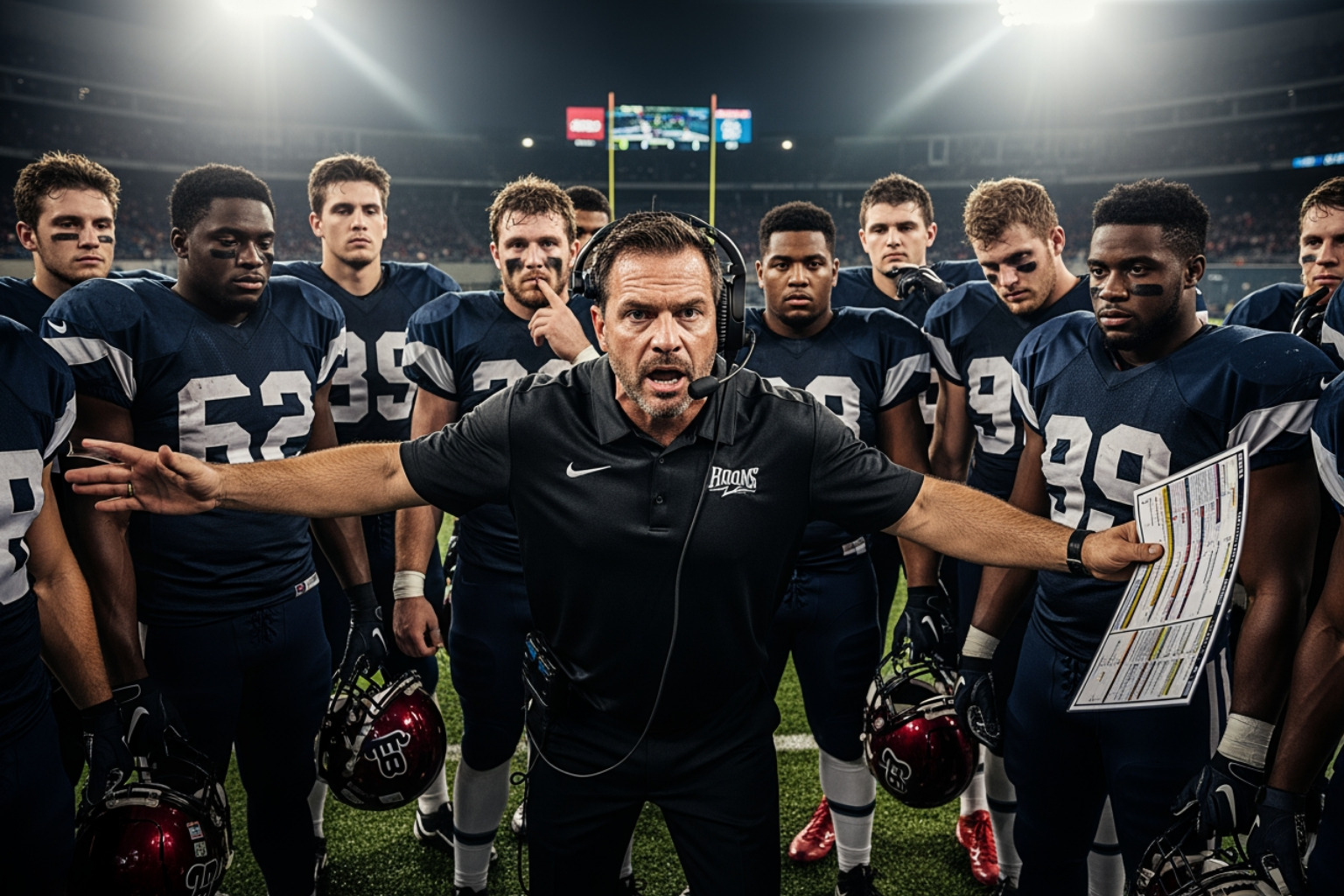
What does “trust the process” mean in practice? It means focusing on executing each play or task flawlessly, believing that consistent effort will lead to overall success. It’s about empowering individuals to understand their specific roles and how those roles contribute to the larger goal. When team members understand their value and the purpose behind their actions, they are more motivated, loyal, and inspired.
For us in the business world, this translates to unifying our teams behind a singular vision and process. We must ensure every employee understands their role, how it connects to the company’s strategic objectives, and that their efforts are genuinely valued. This fosters team cohesion and minimizes misalignment, where even a “little daylight between members of a leadership team becomes blinding and overwhelming to employees one or two levels below,” as Patrick Lencioni notes. Through executive leadership coaching in sports, we see how a unified vision can transform potential into performance.
2. Master the Details: How Meticulous Preparation Creates Champions
In sports, victory often lies in the margins – the small details that differentiate champions from contenders. Meticulous preparation, relentless practice, and an unwavering focus on even the minutiae of the game plan are hallmarks of successful teams. Legendary coaches understand that overlooking small things can lead to significant mistakes. Bud Grant, for instance, would watch how players behaved in trivial situations, like whether they stayed off a patch of grass. He believed that those who disregarded small rules were likely to make larger, game-costing mistakes later.

This emphasis on details and preparation translates directly to effective leadership in business. It’s about setting high standards for every aspect of our work and encouraging our teams to do the same. It means creating a culture where consistent execution is paramount, and where we constantly review and refine our strategies based on feedback and performance. Just as athletes endlessly drill specific movements, we must ensure our teams are well-prepared for every scenario, anticipating challenges and proactively developing solutions. Lessons from elite athletes for business leaders consistently highlight that success is rarely accidental; it’s the result of diligent, detailed work.
3. Build a Culture of Caring: An Empathetic Take on Leadership Lessons from Sports
While sports are often seen as tough and competitive, the most enduringly successful teams are built on a foundation of genuine care and empathy. Leaders like Jim Calhoun, the former UConn men’s basketball coach with over 900 victories in his 40+ year career, often reflected that relationships were more important than championships in the long run. Even famously tough coaches like Tom Coughlin shifted from strict disciplinarian to expressing love and trust to his team, leading to a Super Bowl victory.

A culture of caring goes beyond just being “nice.” It involves positive reinforcement, making every team member feel valued regardless of their role, and creating psychological safety where individuals can thrive. It means understanding that people are not just interchangeable parts of a business but individuals with unique needs and aspirations. When leaders genuinely care about their team member’s well-being and success, it fosters loyalty, inspires greater effort, and ultimately drives peak performance. This empathetic approach is a cornerstone of effective leadership, as demonstrated in leadership lessons from NFL Coach Dick Vermeil. It’s about leading with heart, not just the head.
4. Manage the Egos: Uniting High-Performing Talent for Collective Success
Elite sports teams are often filled with exceptionally talented individuals, many of whom come with significant egos. The challenge for leaders is not to suppress these egos, but to channel them toward collective success. Pat Riley, reflecting on the Los Angeles Lakers’ sudden downfall after winning a championship, attributed it to “the disease of more” – a taste of success leading players to believe they deserved more simply because of past performance. This illustrates the delicate balance required to manage high-performing individuals.

In business, we face similar dynamics with high-performing employees. Top talent often comes with strong opinions and a desire for recognition. The key is to cultivate a team-first mentality, where individual brilliance lifts the entire group. This means recognizing and celebrating contributions while also ensuring that everyone is aligned with shared organizational goals. Managers should avoid dominating talent; instead, they should cajole, collaborate, and create an environment where talent can improve and thrive. Asking for advice from top performers, while retaining final decision-making authority, can also be an effective strategy. It’s about building trust among team members, ensuring they trust each other more than just the manager, as the crucial relationships for performance are often peer-to-peer.
5. Accept the Pressure: Turning Adversity into a Competitive Advantage
Pressure is an inherent part of both sports and business. Whether it’s a championship game or a critical business decision, leaders and their teams are constantly under scrutiny. The remarkable thing about elite athletes and leaders is their ability to not just cope with pressure, but to accept it as a privilege. Billie Jean King, facing immense pressure in the 1973 “Battle of the Sexes” tennis match, said, “Pressure is a privilege.” Doug Williams, the first Black quarterback to win a Super Bowl, knew a thing or two about adversity and the rewards of seeing it through with grace and confidence.
This mindset is crucial for leaders. Instead of viewing pressure as a burden, we can frame it as an opportunity to perform at our best. Embracing pressure means developing resilience and mental fortitude, allowing us to lead effectively through crises and high-stakes situations. It involves learning from mistakes without dwelling on them, quickly analyzing what went wrong, and then moving forward. As Mike Ditka, the three-time Super Bowl champion, wisely put it: “Success is not permanent, and failure is not fatal.” For us, this means developing the capacity to stay calm under fire, make clear decisions, and inspire our teams to overcome challenges, changing adversity into a catalyst for growth.
6. See the Whole Field: A Strategic View on Leadership Lessons from Sports
In sports, the most effective players and coaches possess an uncanny ability to “see the whole field”—to understand the broader context of the game, anticipate future moves, and adjust strategy accordingly. Wayne Gretzky, the legendary hockey champion, said, “I skate to where the puck is going to be, not where it has been.” This foresight is about playing the long game, developing a strategic vision that extends beyond the immediate play or quarter. It involves being an “ambidextrous organization” – one that can both optimize existing operations and explore new opportunities.
For business leaders, seeing the whole field means moving beyond immediate tasks to develop long-term, forward-thinking business strategies. It’s about anticipating market shifts, technological advancements, and competitive pressures. We must cultivate a deep curiosity, learning from other disciplines and industries, and constantly seeking new sources of insight. This strategic perspective, much like an elite athlete’s ability to process complex information rapidly, allows us to make critical decisions, adapt to change, and empower our teams to act in alignment with broad objectives. McKinsey’s research notes that business leaders benefit from adopting the mindset of elite athletes, constantly learning and adapting. It’s about not just reacting to the present but actively shaping the future.
7. Make it Fun: Leveraging Passion to Drive Engagement and Innovation
While sports are serious business, the element of fun and passion is often what fuels engagement and innovation. Think about the Pittsburgh Pirates and their famous accept of “We Are Family” as their theme song, creating a sense of camaraderie and joy. When players genuinely enjoy what they do, their passion becomes contagious, elevating performance and fostering a creative, dynamic environment. As Michael Schrage, research fellow at MIT Sloan, puts it, “Serious play is not an oxymoron: it is the essence of innovation.”
In the workplace, a culture of enjoyment and camaraderie fuels high performance. Leaders can leverage the power of “fun” and “passion” to improve workplace engagement and innovation. This doesn’t mean turning the office into a playground, but rather fostering an environment where creativity is encouraged, collaboration is natural, and team members feel a genuine connection to their work and to each other. When people are passionate about what they do, they are more likely to go the extra mile, innovate, and find joy in their accomplishments. We believe that by integrating elements of serious play and authentic passion, we can open up creativity and build a more dynamic, committed team that thrives.
Conclusion: Integrating Sports Lessons into Your Leadership Playbook
The leadership lessons from sports are not just inspiring anecdotes; they are actionable strategies that can profoundly impact your organization. From fostering unwavering belief and meticulous preparation to building a culture of caring, managing egos, embracing pressure, seeing the whole field, and making work enjoyable, these principles form a powerful playbook for modern leaders.
At Strategy People Culture, we specialize in helping leaders like you integrate these proven sports principles into your executive and leadership development. We understand that leadership is a journey, and like any athlete, continuous coaching and refinement are essential. This is why companies typically enjoy a 7× ROI from executive coaching, seeing tangible improvements in performance, engagement, and retention.
Our unique approach, drawing on over 25 years of experience, focuses on fostering awareness and success for both people and business. We provide the tools, insights, and personalized guidance to transform your leadership game and build championship-caliber teams.
Ready to apply these powerful leadership lessons from sports and lift your organization’s performance? Contact us today to develop your leadership game with executive coaching. We’re here to help you turn potential into peak performance.