How Leaders Build High Performing Teams
Why Do Some Teams Click While Others Stall?
You may have smart people, clear goals, and plenty of effort, yet still see confusion, low trust, slow decisions, or uneven accountability. The need is imperative: leaders must build teams that perform under pressure.
Strategy People Culture, LLC supports leaders turn those concerns into practical team-building habits: clearer roles, stronger trust, better feedback, and leadership behaviors that make high performance repeatable.
Here’s a quick answer to what it actually takes:
- Lead with intention — 70% of team engagement comes from the manager, not company strategy or perks
- Create psychological safety — teams that trust each other dramatically outperform those that don’t
- Set clear goals and roles — ambiguity kills performance at every level
- Coach, don’t just manage — teach managers to develop people, not just direct them
- Build a leadership pipeline — high performance must scale beyond any single team or leader
- Measure what matters — track behavior change, not just output
Most organizations want high-performing teams. Few know how to build them deliberately.
The gap is almost never strategy. It’s leadership.
Research from Gallup — spanning more than 183,000 teams over three decades — found that the quality of a team’s manager is the single biggest driver of team outcomes. Yet 34% of organizations have no strategy for team development at all, and 21% invest zero time or resources into it.
That’s a costly blind spot — especially for business leaders dealing with high turnover, inconsistent performance, or a leadership bench that isn’t ready for what’s next.
I’m Andrew Botwin, founder of Strategy People Culture, LLC, where I help business leaders close that gap by combining executive coaching, HR strategy, and leadership development to build organizations where building high performing teams becomes a repeatable, scalable process — not a lucky accident. In this guide, I’ll walk you through exactly how leaders make it happen.
The Core Framework for Building High Performing Teams
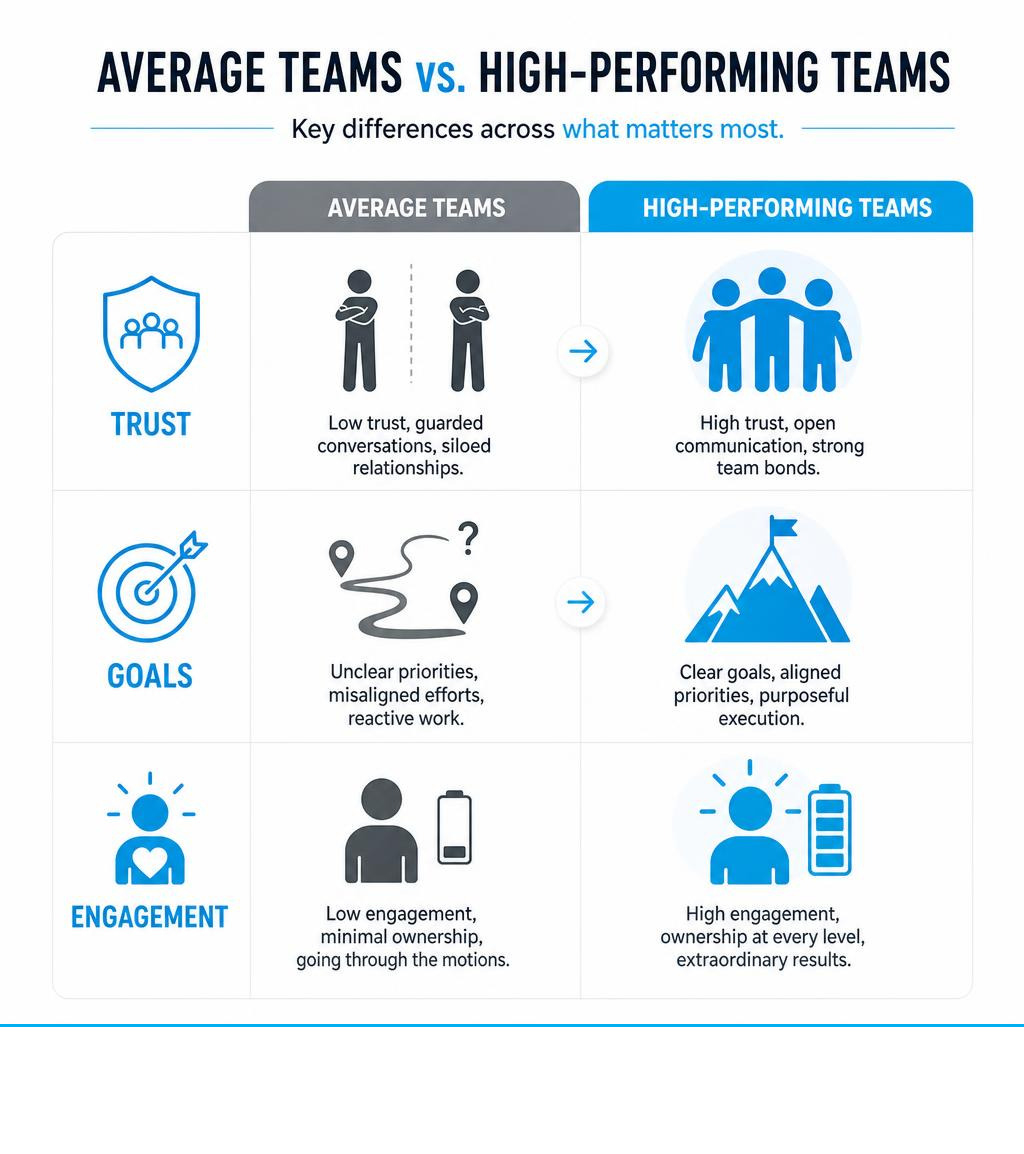
When we look at teams that consistently exceed expectations, we are not looking at a collection of lucky hires. We are looking at a carefully constructed ecosystem. Harvard researcher J. Richard Hackman studied thousands of teams and identified six conditions that predict team effectiveness, explaining up to 80% of the difference between high and low performing teams.
These conditions include having a real team (not just a group in name), a compelling direction, an enabling structure, a supportive organizational context, expert coaching, and adequate resources.
To achieve this, organizations must shift from isolated individual efforts to Collaborative Leadership. True collaboration means aligning diverse perspectives toward shared outcomes, transforming individual talents into a collective superpower.
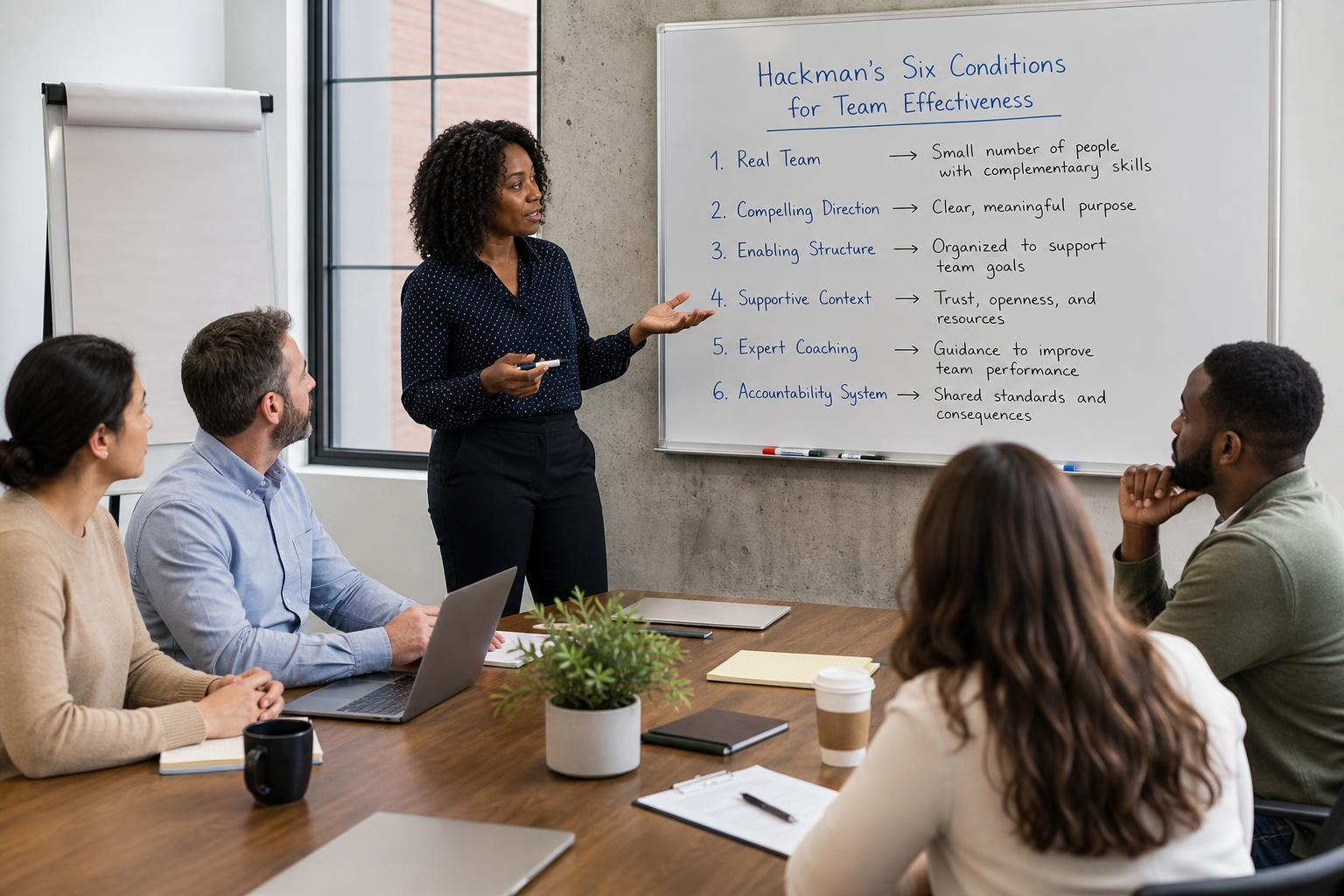
To understand what we are aiming for, it helps to compare the baseline reality of average teams with the dynamic environment of high-performing ones:
| Attribute | Average Teams | High-Performing Teams |
|---|---|---|
| Trust & Respect | Conditional; based on transactional alignment. | Deeply rooted; 72% of members report high mutual respect. |
| Adaptability | Resistant to change; rigid processes. | Highly agile; 2.5 times more likely to pivot quickly. |
| Goal Clarity | Low; only 15% of employees know top priorities. | High; clear alignment with shared accountability. |
| Inclusion | Superficial; minor differences cause friction. | Active; divergent thinking is leveraged as an asset. |
The Leadership Blueprint for Building High Performing Teams
The foundation of any exceptional team is its leadership. We know that 70% of team engagement comes from the manager. If a manager is disengaged, disorganized, or purely transactional, the team will inevitably mirror those traits.
To practice Good Leadership, leaders must establish absolute role clarity and tight goal alignment. When team members do not know what is expected of them, or how their work connects to the company’s broader mission, motivation plummets.
Leaders must define success metrics clearly, co-create goals with their team members, and ensure that everyone understands their unique contribution. This clarity prevents the friction of overlapping responsibilities and gives team members the autonomy to execute confidently.
Shifting from Management to Executive Coaching
Traditional management is about oversight, delegation, and directing tasks. High-performance leadership, however, is about coaching. When we teach managers how to coach their own teams, we unlock a massive shift in capability.
Coaching-focused leaders adopt the principles of Servant Leadership. They view their primary role as removing barriers, providing resources, and helping their direct reports grow. This requires a shift in daily habits, emphasizing continuous feedback over annual performance reviews, and mastering Delegation in Leadership to empower employees to take ownership of their outcomes.
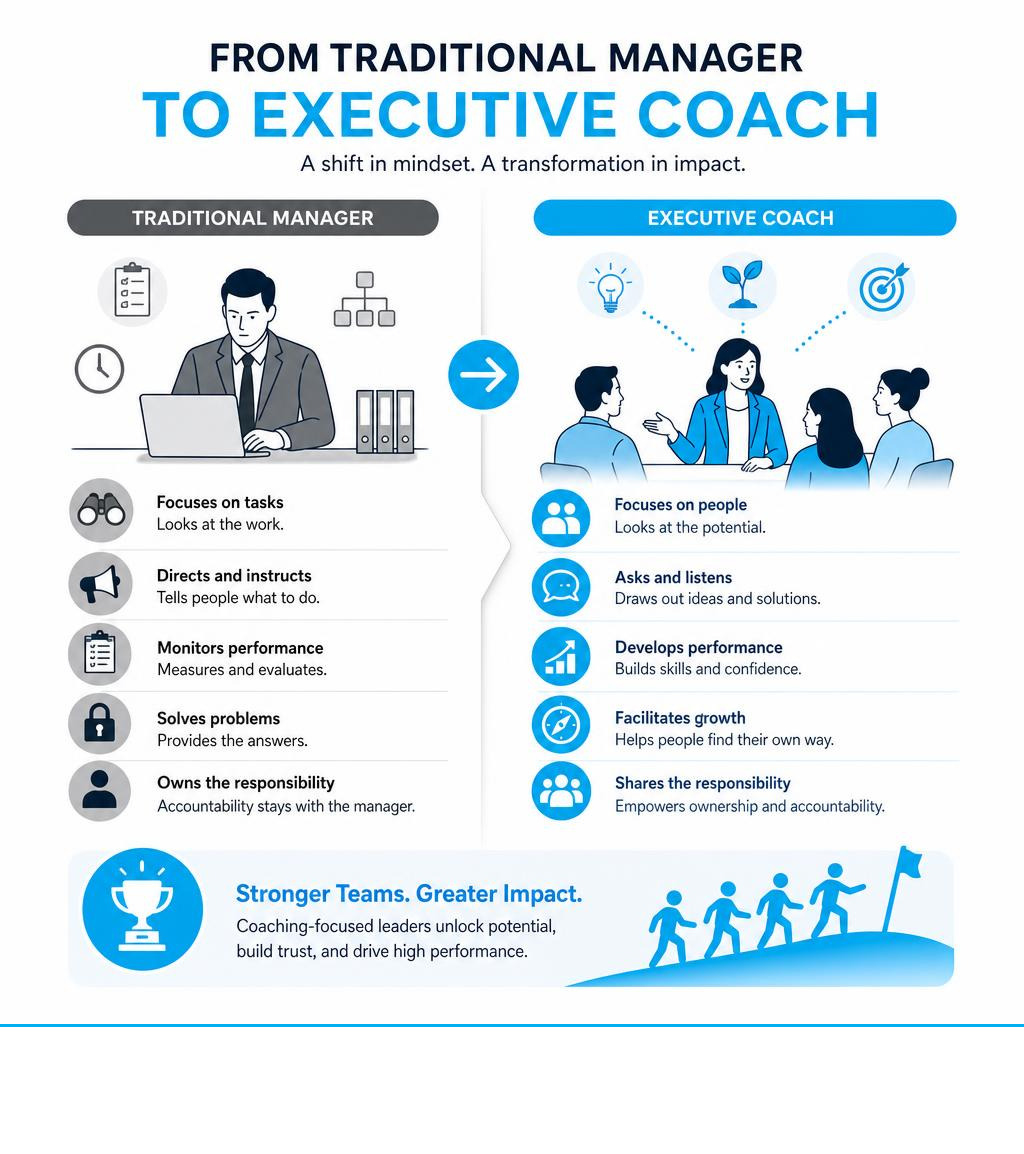
By integrating coaching into weekly 1:1 check-ins, managers can move from asking “What is the status of this project?” to “What skills are you developing, and how can I help you overcome your current roadblocks?” This continuous development cycle builds a team that is resilient, highly skilled, and deeply engaged.
Establishing Psychological Safety and Accountability
High performance cannot exist without trust. If team members are afraid to speak up, admit mistakes, or propose unconventional ideas, innovation dies. This is why cultivating Psychological Safety at Work is non-negotiable.
We frequently discuss Why Psychological Safety is the Missing Piece in Employee Performance. When safety is established, team members don’t waste energy protecting themselves from blame. Instead, they direct their energy toward solving complex business problems.
In fact, research shows that 65% of high-performing teams report mutual trust compared to just 28% in lower-performing groups.
However, psychological safety is not about lowering standards or avoiding difficult conversations. True high performance requires pairing safety with high accountability.
By practicing Leadership Accountability in Business, leaders model the behavior they expect to see. They hold themselves accountable to their promises and, in turn, expect their team members to take full ownership of their results. When mutual respect and clear standards exist side-by-side, peer-to-peer accountability naturally develops, reducing the need for constant managerial intervention.
Cultivating Long-Term Excellence and Leadership Pipelines
Building high performing teams is not a one-time project or a weekend retreat. It is an ongoing, strategic discipline. To sustain high performance over years rather than months, organizations must build an Intentional Culture and Leadership model that actively develops the next generation of leaders.
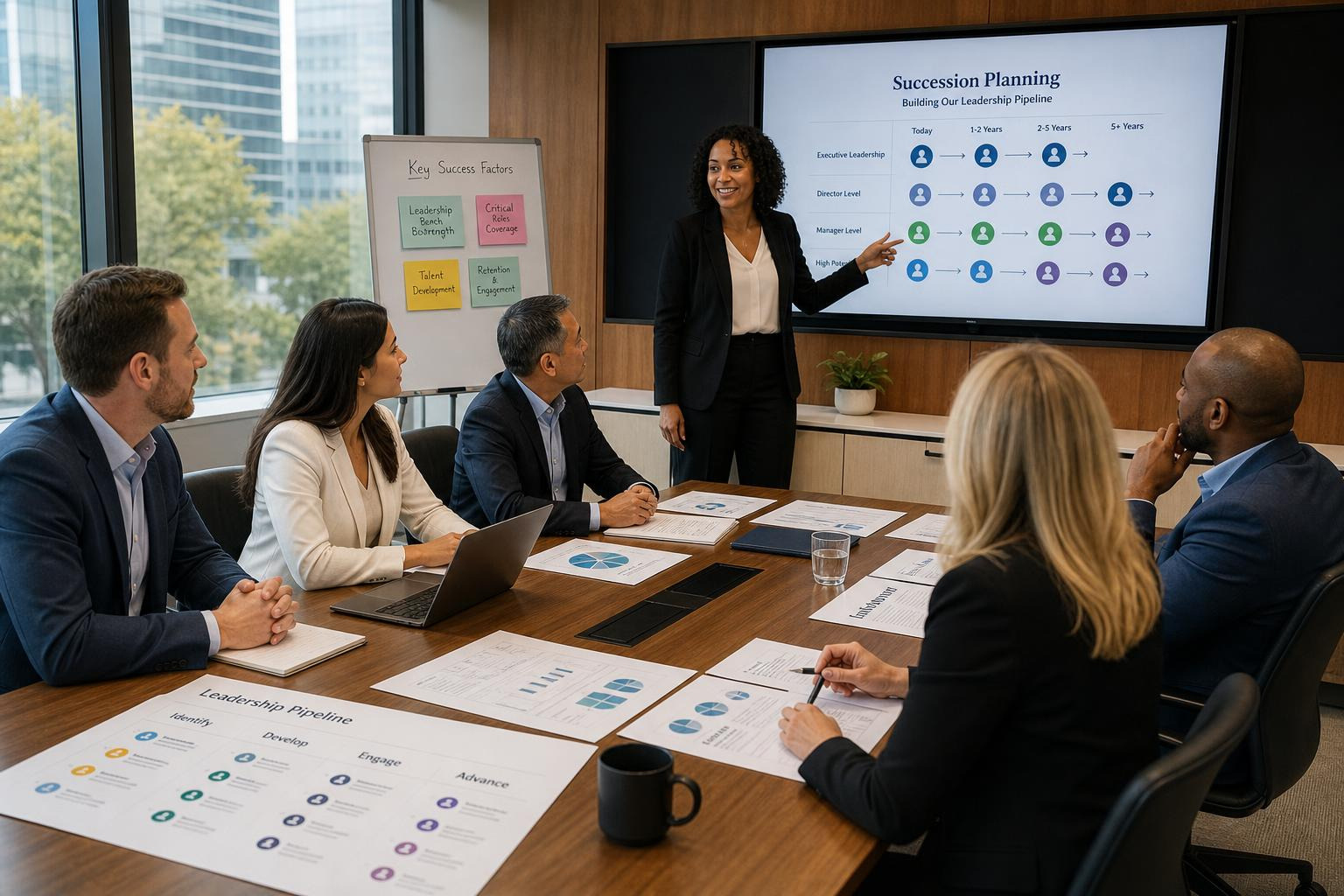
Succession Planning and the Role of Building High Performing Teams
One of the greatest risks to team performance is the sudden departure of a key leader or team member. Without a robust leadership pipeline, a high-performing team can quickly regress. This is where succession planning and team development intersect.
By identifying high-potential talent early, we can intentionally prepare them for future leadership roles. This process relies heavily on developing Emotional Intelligence in Leadership. Technical skills can be taught relatively quickly, but the self-awareness, empathy, and social skills required to lead a team take time and deliberate coaching to develop.
When organizations focus on building these human capabilities, they future-proof their leadership bench, reduce the disruptive costs of turnover, and ensure seamless transitions when promotions occur.
Scaling Team Excellence Across the Organization
At Strategy People Culture, LLC, based in East Hanover, NJ, we believe that an organization is ultimately a “team of teams.” High performance should not be isolated to a single department; it must be scaled across the entire organization.
Through our customized executive coaching, leadership training, and HR consulting services, we help organizations translate these principles into daily practices. Led by Andrew Botwin, we integrate coaching and strategic HR to help leaders build trust, establish clear accountability, and teach managers how to coach their own teams effectively.
If you are ready to transition your leadership team from average to exceptional, we invite you to learn More info about executive leadership coaching and partner with us to design a culture where high performance is the standard.