
Why Psychological Safety Is The Missing Piece In Employee Performance

Companies invest heavily in strategy, benefits, and training — yet far too many are still struggling with disengagement and performance. And research shows that the real driver of productivity is psychological safety: an environment where employees feel safe to speak up, ask questions, admit mistakes, and share ideas without fear of embarrassment or retaliation.
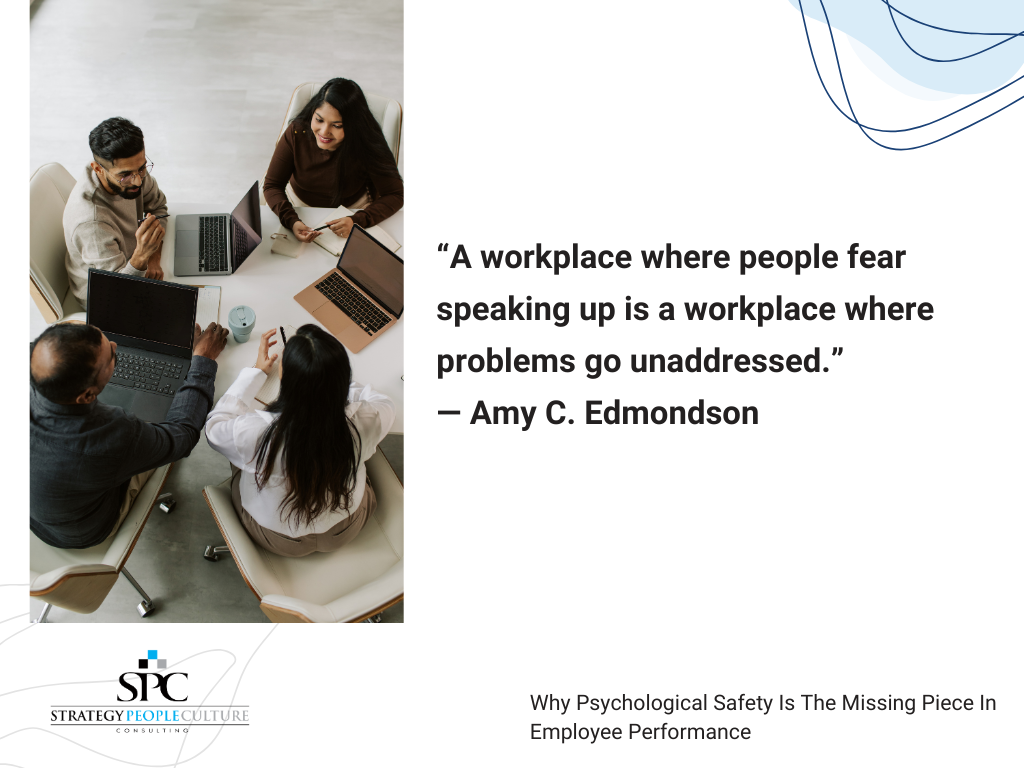
(Amy Edmondson, Harvard Business School)
Creating psychological safety is not some “nice-to-have” culture trend. It has a direct impact on innovation, teamwork, performance, and retention.
Why Psychological Safety Matters
Google’s Project Artisol found psychological safety to be the number one predictor of high-performing teams — ahead of talent, resources, or leadership style.
When employees feel safe:
- They collaborate more effectively
- They report issues earlier
- Mistakes turn into learning opportunities
- Innovation increases
- Turnover decreases
When safety is missing, people stay silent. Silence leads to errors, disengagement, and eventually — exits.

The Cost of a Fear-Based Culture
A lack of psychological safety leads to:
- Avoiding honest feedback
- Withholding new ideas
- Covering up mistakes
- Higher conflict and lower trust
- Increased turnover and burnout
Workplaces where people feel “on edge” often face difficulties in recruitment, leadership development, and culture initiatives.
How Leaders Can Build Psychological Safety
Model curiosity and humility:
- Leaders who ask questions and admit mistakes themselves demonstrate valuing learning over perfection.
- Respond calmly to bad news.
- If employees are afraid of how you might react, they won’t speak up when it counts.
- Set clear expectations about communication.
Normalize speaking up by adding questions like: Address disrespect immediately Dismissive or rude behavior, if ignored, kills psychological safety. Invest in leadership and communication training. Training leaders in conflict resolution, active listening, and accountability reinforces a culture of trust.
This is where Strategy People Culture supports organizations — through coaching, conflict resolution training, and communication frameworks that help teams thrive.
The Bottom Line: Psychological Safety Drives Real Results
Psychological safety isn’t an abstract idea — it’s a measurable business advantage. When employees feel respected and heard, performance rises, innovation grows, and organizations become more resilient.
If your team is struggling with communication, trust, or engagement, strengthening psychological safety may be the key to unlocking their potential.
Want support building psychological safety on your team? Learn more about our leadership and culture programs at Strategy People Culture.
Schedule an appointment with us today.
Why Psychological Safety Is The Missing Piece In Employee Performance
