Leading Through Change: A Manager’s Guide to Change Management

Why do so many well-planned changes still feels confusing, or exhausting for the people expected to carry them out?
Leaders often worry about resistance, stalled momentum, unclear communication, and whether their managers are truly ready to guide teams through uncertainty. That is why change management training for leaders is not optional; it is an imperative need.
With the support of Strategy People Culture, LLC, executives can develop the confidence and people-first strategies needed to lead change with clarity. Through structured training and coaching, managers learn how to communicate change, support employees, reduce friction, and keep the organization moving forward.
If you’re a manager or HR leader looking for a fast answer, here’s what you need to know:
| Question | Quick Answer |
|---|---|
| What is it? | Training that builds a leader’s ability to plan, communicate, and lead people through organizational change |
| Why does it matter? | Nearly 70% of change initiatives fail — often because leaders focus on process and ignore people |
| Who needs it? | Managers, executives, HR leaders, and anyone responsible for guiding teams through transitions |
| What does it cover? | Communication, resistance management, stakeholder engagement, change frameworks, and coaching skills |
| What’s the outcome? | Faster adoption, stronger engagement, and change that actually sticks |
Change is no longer a periodic disruption. It is the operating environment. 74% of HR leaders say that managers are not equipped to lead change, yet 75% of organizations expect to multiply the number of major change initiatives they undertake in the next three years. That gap — between what leaders are asked to do and what they’re prepared for — is exactly where organizations lose ground.
The cost of that gap shows up fast. Disengaged teams. Stalled initiatives. Talent walking out the door. And a culture that learns to resist change rather than move with it.
This guide walks managers through what change management training actually involves, why it matters for leadership development and succession planning, and how to build the internal coaching capability your organization needs to make change work — not just once, but consistently.
I’m Andrew Botwin, founder of Strategy People Culture, LLC, where I help business leaders build stronger teams and workplace cultures through executive coaching, HR strategy, and leadership development — including change management training for leaders who need practical tools, not just theory. Having helped organizations move from high-turnover environments to nationally recognized great workplaces, I’ve seen how the right training transforms the way managers lead people through uncertainty.
The Strategic Value of Change Management Training for Leaders
When organizations map out a major transition—whether it is a digital transformation, a restructure, or a shift in service delivery—they often spend millions on the technical aspects of the change. They buy the software, hire the integration consultants, and build beautiful gantt charts.
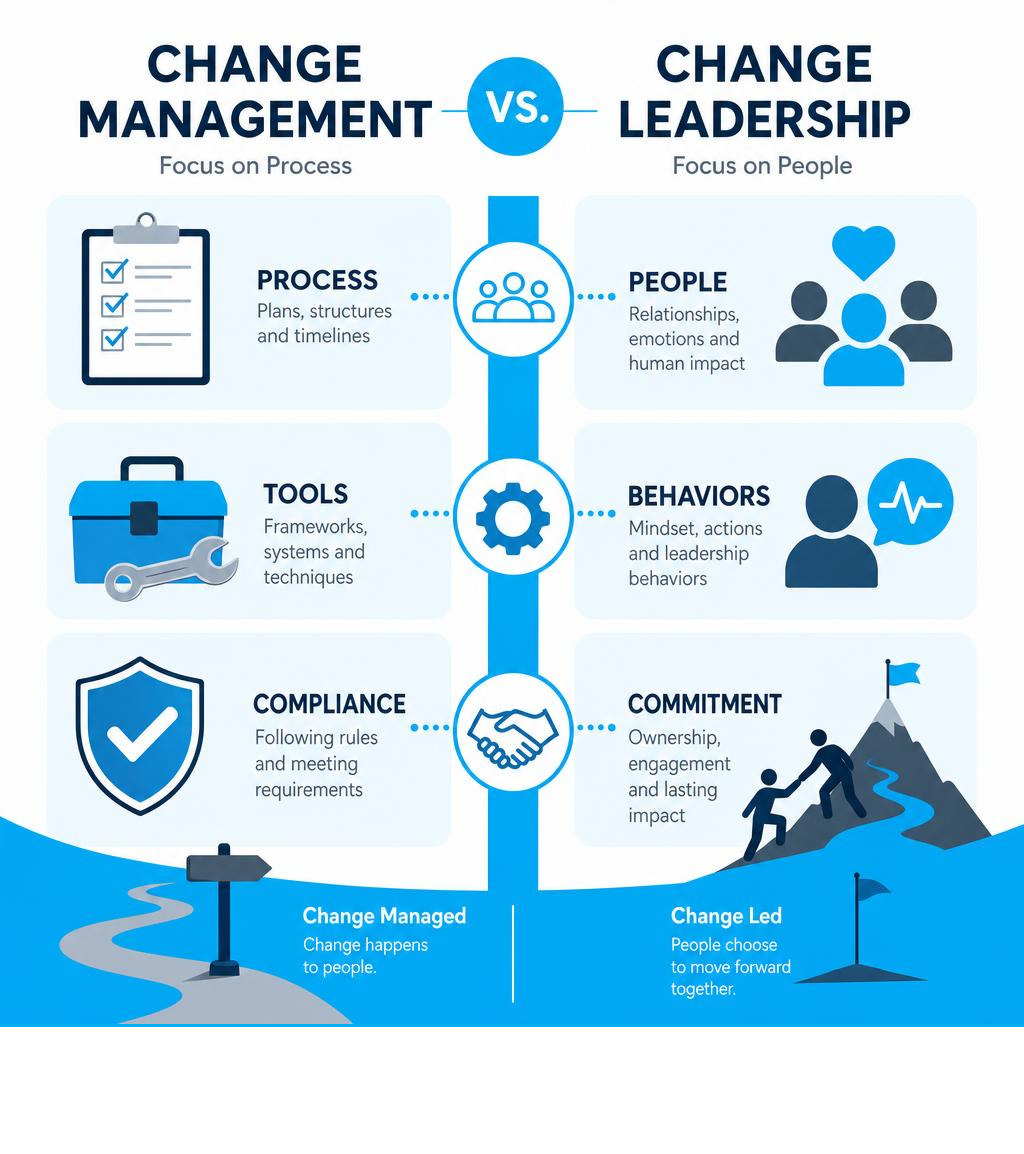
Yet, nearly 70% of change initiatives fail. Why? Because the human element is treated as an afterthought. It is easy to forget that organizations do not change; people do. If your managers are not prepared to guide their teams through the emotional and behavioral shifts required, even the most brilliant strategy will stall.
In today’s business landscape, change has become our status quo. Reflecting on recent operational shifts, 42% of businesses expected the 2025 economic slowdown to transform how they operate. As we navigate May 2026, those transformations are actively testing leadership teams across New Jersey and beyond. Leaders who lack structured training often default to top-down directives, which only fuels anxiety and active resistance.
Investing in change management training for leaders is not just a nice-to-have professional development exercise. It is a strategic imperative that directly impacts your bottom line, retention rates, and organizational agility. By teaching leaders how to balance the structural process of transition with compassionate, clear-eyed people management, you turn potential disruptions into growth accelerators. For a deeper look at navigating these challenges, explore our insights on Leading Through Uncertainty.
Executive Coaching and Change Management Training for Leaders
While classroom training provides foundational frameworks, executive coaching offers the personalized, real-time application that makes those frameworks stick. Leading change requires a high degree of self-awareness and behavioral adaptation. Leaders must learn to recognize their own instinctive reactions to stress and uncertainty before they can effectively manage the reactions of their teams.
Through targeted coaching, executives and senior managers can pressure-test their communication plans, unpack complex power dynamics within their organizations, and practice the difficult conversations that inevitably accompany structural transitions. This customized support helps leaders shift from a reactive mindset to a proactive, strategic posture. For more on structuring these growth pathways, read our Leadership Management Development Guide.
Succession Planning and Building a Resilient Leadership Pipeline
A resilient organization does not rely on a single “heroic” leader to pull it through a crisis. True organizational agility is built by developing a deep, sustainable pipeline of leaders who are highly skilled in navigating disruption. This is where succession planning and change management training intersect.
When you integrate change leadership competencies into your succession planning, you ensure that future executives are evaluated not just on their technical performance, but on their ability to guide people through ambiguity. Training your high-potential managers today guarantees that when the next inevitable market disruption arrives, your future bench is already equipped with the tools to lead. Discover how to build this capability in our guide on Resilient Leadership.
Teaching Managers to Coach Their Teams Through Structural Shifts
The ultimate goal of change management training for leaders is to turn your managers into effective coaches for their own teams. During a transition, employees do not look to external consultants or corporate HR for direction—they look to their immediate supervisor.
If managers are trained to coach rather than simply manage, they can help employees navigate their personal “stages of concern.” This involves:
- Active Listening: Creating safe spaces for employees to voice concerns without fear of negative consequences.
- Empathetic Feedback Loops: Providing timely, transparent updates and admitting when some answers are still unknown.
- Individualized Support: Recognizing that different team members adapt to change at different speeds and require customized coaching styles.
By teaching managers to coach, you build a workplace where employees feel heard, valued, and empowered to contribute to the future state of the business. This approach is central to creating an Intentional Culture and Leadership model.
Cultivating Adaptive Cultures and Measuring Long-Term Impact
A successful change initiative does not end when a new system goes live. It ends when the new behaviors become “the way we do things around here.” To achieve this level of sustainability, organizations must consciously cultivate an adaptive Workplace Culture that views change as an opportunity rather than a threat.
Core Methodologies in Change Management Training for Leaders
Effective training programs introduce leaders to established, research-backed change frameworks. Rather than relying on gut feeling, managers learn to use repeatable models to diagnose friction points and structure their transition plans.
Here is how some of the most common structural and behavioral change models compare:
| Model / Framework | Primary Focus | Best Used For… |
|---|---|---|
| ADKAR (Prosci) | Individual transition (Awareness, Desire, Knowledge, Ability, Reinforcement) | Managing the personal, step-by-step journey of each employee through a change. |
| Kotter’s 8-Step Model | Organizational process and momentum | Structuring large-scale, top-down strategic transformations from vision to consolidation. |
| Bridges’ Transition Model | Psychological and emotional stages | Navigating the human emotional journey (Ending, Neutral Zone, New Beginning). |
| Opposing Forces / Force Field | Identifying enablers and barriers | Analyzing the driving and resisting forces affecting a specific organizational change. |
| The Purpose Triangle | Defining the “Why” | Aligning the future state across work products, processes, and people. |
Overcoming Employee Resistance and Fostering Workplace Trust
Resistance to change is a natural human reaction, not a behavioral defect. Our brains are wired to view the unfamiliar as a threat. When leaders understand this psychological reality, they can move away from frustrating “mandate-driven” tactics and focus on building genuine commitment.
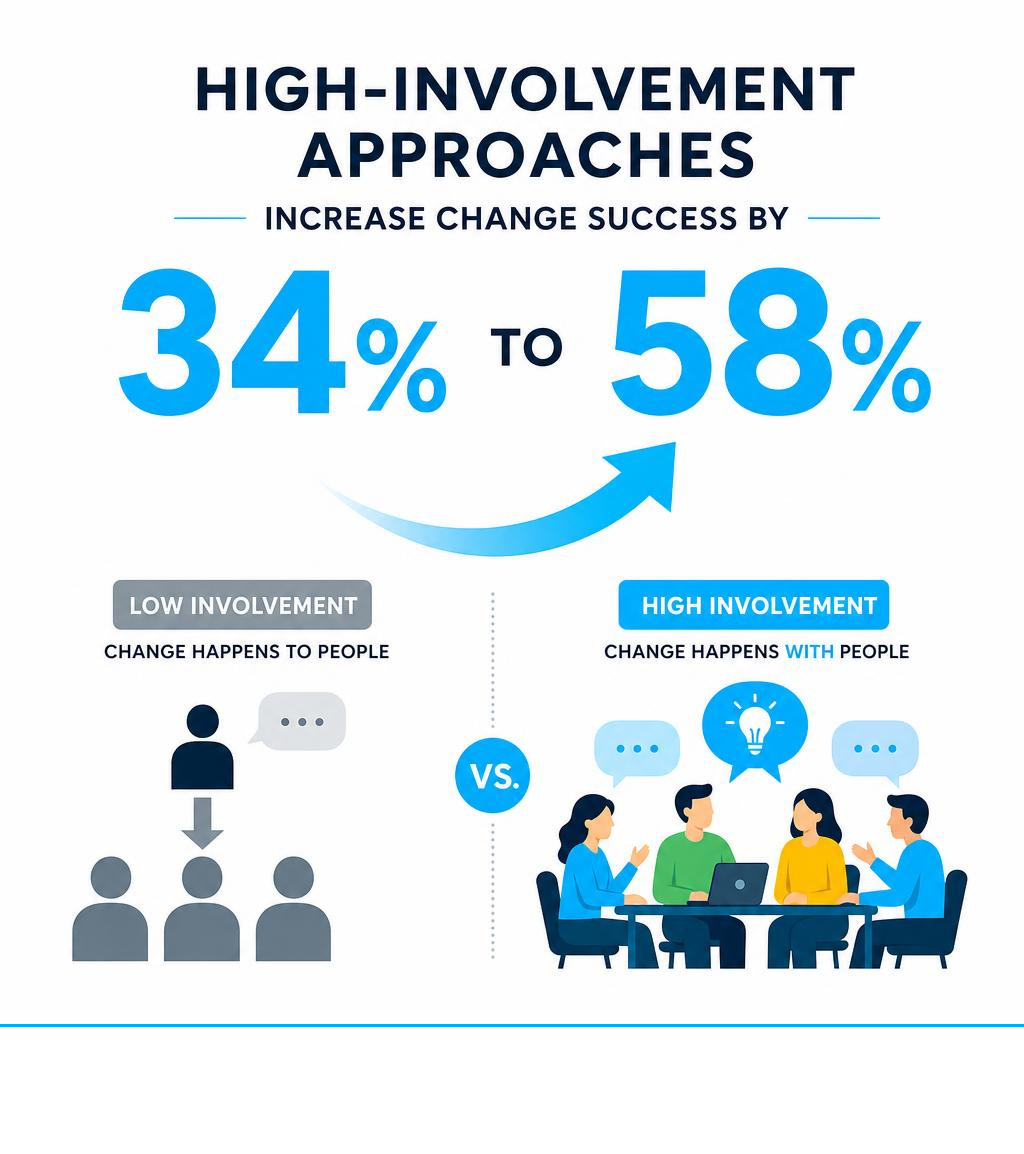
Most change initiatives fail because companies default to a top-down, minimal-involvement approach that ignores the real concerns of their people. In contrast, using a high-involvement approach that fosters dialogue between change leaders and employees can increase change success by 34% to 58%, decrease implementation time by 33%, and boost employee engagement by 38%. By actively involving employees in shaping the transition, you build trust and reduce the anxiety that leads to disengagement.
Measuring Training ROI and Sustaining Organizational Alignment
How do you know if your investment in change management training for leaders is actually paying off? At Strategy People Culture, LLC, we work with organizations to establish clear key performance indicators (KPIs) before training begins.
To measure the true impact of your program, look at both lead and lag indicators:
- Employee Adoption Rates: How quickly are teams using the new systems or processes?
- Retention Rates: Has turnover stabilized or decreased during major transitions?
- Engagement Scores: Are employees reporting high levels of trust and clear communication from their direct managers?
- Project Timeline Velocity: Are your strategic initiatives meeting their milestones with less friction?
By combining structured training with ongoing executive leadership coaching, you ensure that your managers don’t just learn these skills—they embed them into their daily leadership habits, keeping your entire organization aligned and resilient.
Ready to Equip Your Leaders for the Future?
If you want to build a resilient leadership pipeline, reduce employee resistance, and make your next corporate transition a success, we can help. Based in East Hanover, New Jersey, Strategy People Culture offers tailored leadership training and executive coaching programs designed for real-world impact.
Contact Strategy People Culture today to start a conversation about equipping your managers to lead through change with confidence.